The Story
Why it exists.
The beginning
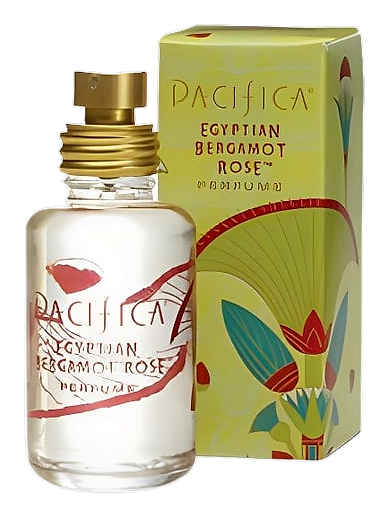
Egyptian Bergamot Rose launched in 2009 from Pacifica's small lab, built around an ancient perfume recipe. Rose had been cultivated across Persia and Arabia for centuries, a flower weighted with history and ritual. Brook Harvey-Taylor drew from that lineage, grounding the composition in botanical purity rather than synthetic construction. The result is a straightforward floral-citrus that asks only four notes to do the work: orange and bergamot to open, one rose at the heart, amber to anchor what came before. Nothing extra. No crowded pyramid, no layered complexity. Just the recipe, executed.
What makes Egyptian Bergamot Rose structurally unusual is its restraint. Most fragrances layer multiple heart notes to build complexity. This one puts all its weight on a single rose, and the simplicity is the point. The dual-citrus opening, bergamot and orange arriving together rather than sequentially, creates a bright, immediate lift without competition. The amber base doesn't project loudly; it holds the composition close to skin, making this a fragrance built for proximity rather than announcement. The ancient recipe inspiration shows in the honeyed, almost dusty quality the rose carries rather than any modern synthetic shimmer.
The evolution
The opening arrives clean and immediate. Orange and bergamot share the first thirty minutes, bergamot's bitter-floral edge softened by orange's sweeter brightness. There's no hesitation here. The Egyptian rose follows, settling warm and honeyed into the composition, this is not a sharp or green rose, but one that carries the weight of its origin, a little dusty, a little ancient. The amber arrives last, anchoring everything in warm resin that holds close to the skin. The sillage stays moderate throughout. Six to eight hours, depending on skin. The citrus fades before the rose, and the rose fades before the amber, but by the time only amber remains, the fragrance has already said everything it came to say. Intimate. Present. Waiting to be noticed.
Cultural impact
Egyptian Bergamot Rose arrived at a cultural moment when natural and botanical fragrances were gaining mainstream traction in the late 2000s. Pacifica positioned the scent as part of a broader wellness movement that rejected synthetic ingredients in favor of plant-based alternatives. The fragrance drew from ancient Egyptian and Arabian rose cultivation traditions, connecting modern consumers to historical perfumery practices that emphasized natural materials. Its 2009 release coincided with growing consumer interest in transparency about fragrance ingredients, making it an early example of the clean beauty ethos that would reshape the industry over the following decade.