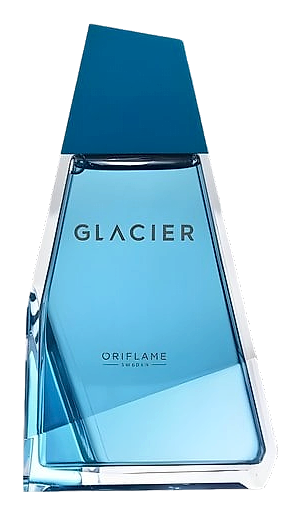

The Story
Why it exists.
The beginning
Glacier arrived in 2005, created by Philippe Bousseton for Oriflame. The brief was simple: capture the feeling of sharp, cold air, that moment when you step outside and the temperature drops and everything feels more awake. Bousseton built it around tarragon and rosemary at the top, herbs that carry a green, slightly bitter freshness, then let mint and lavender carry the heart. The name says everything it needs to say. Ice. Cold. Clarity. Oriflame had been building its fragrance portfolio through the early 2000s with scents like Deep Woods and Serene Blue, each one shaped by the brand's Swedish design sensibility, clean lines, understated character, nature without spectacle. Glacier fits that lineage. It's not trying to impress anyone in the room. It's trying to make your morning feel sharper.
What makes Glacier work is the way it holds freshness without chasing it. Many aromatic fragrances open bright and then fade into something ordinary, the mint disappears, the herbs collapse into a vague green base. Glacier's structure keeps the mint and lavender prominent through the heart, so the cool character persists even as the top herbs settle. The amber and woody notes in the base don't warm it up so much as ground it, stopping it from becoming thin or one-dimensional as it wears. It's a composition that knows what it is and doesn't apologize for it.
The evolution
The opening is immediate and herbal. Tarragon and rosemary arrive crisp, green, slightly bitter, like crushing fresh herbs between your fingers. No sweetness, no fruit, no soft landing. Thirty minutes in, the mint takes over and the lavender joins, and the whole thing shifts cooler, cleaner, more medicinal. This is the phase that lasts, the aromatic heart that defines Glacier for most of its wear time. By the second hour, the woody base starts to show. Amber adds a faint warmth underneath, but it never fully takes over. The mint retreats slowly, not dramatically. On most skin types, Glacier is done by hour three or four, moderate sillage means it stays close, which suits the scent. It doesn't announce itself. It sits on skin like the memory of cold air.
Cultural impact
Glacier arrived in 2005 during Oriflame's push to compete in the mass-market fresh fragrance segment. At a time when many European brands were expanding their fragrance offerings, Oriflame positioned Glacier as a clean, accessible scent built around mint and herb notes. The fragrance reflected a broader trend in the mid-2000s toward lighter, more functional compositions that prioritized wearability over complexity. While not a blockbuster release, Glacier carved out a niche among consumers seeking straightforward, mint-forward scents without the investment required for higher-end alternatives.