
The Story
Why it exists.
The beginning
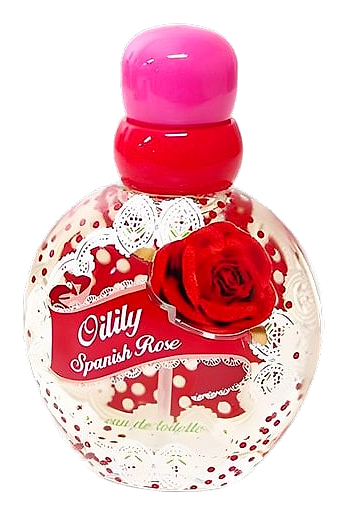
Oilily launched its first fragrance in 2003, bringing the brand's colorful, hand-illustrated aesthetic into the world of perfume. Spanish Rose arrived as a statement: not a safe floral, but a composition that paired vanilla cream and coconut with peach and red berries, then grounded the sweetness in iris powder and, unexpectedly, civet. The name suggests something romantic, perhaps retro. The execution reflects the artisan spirit of a Dutch fashion house that built its identity on bold graphics and handcrafted details rather than mass-market restraint.
What makes Spanish Rose work is the tension between its edible sweetness and its animalic depth. Vanilla and coconut suggest comfort, warm, soft, approachable. The civet adds something else entirely: a warm-skin quality that stops the fragrance from reading as purely dessert. Iris powder ties the two together, giving the composition structure without sharpness. It's a formula that trusts its materials: let the coconut do its thing, let the vanilla deepen, let the civet whisper rather than shout. That's where the fragrance lives, in the space between sweet and sensual.
The evolution
The opening hits bright and tart. Bergamot, lemon, a scatter of red berries, this is the sparkling phase, the first impression that announces itself confidently. Within minutes, the vanilla-cream accord rises to meet it. The transition isn't dramatic, more like a door opening onto a warm room. The peach arrives next, soft and slightly overripe, blending with coconut in a way that smells almost edible. Then comes the surprise: the civet. It doesn't read as animalic in the aggressive sense. It reads as skin-warm, intimate, the kind of note that makes you lean closer. As the hours pass, the vanilla deepens. The sillage softens from moderate to close. On fabric, Spanish Rose can last a full day, on skin, expect 4-6 hours depending on your chemistry. The drydown is powdery, warm, and quietly persistent: vanilla and sandalwood holding hands with iris, civet just barely there, a memory of warmth rather than a statement.
Cultural impact
Spanish Rose occupies a specific corner of early-2000s feminine fragrance: the sweet-powdery gourmand. Peers like Cacharel Noa and Vera Wang Princess shared this territory, but the civet note sets Spanish Rose apart, it's the detail that gives the fragrance character beyond its sweetness. The fragrance has maintained a quiet following, with wearers drawn to its warmth and the way it differentiates itself from safer options in the genre.