

Heritage
A house, in its own words
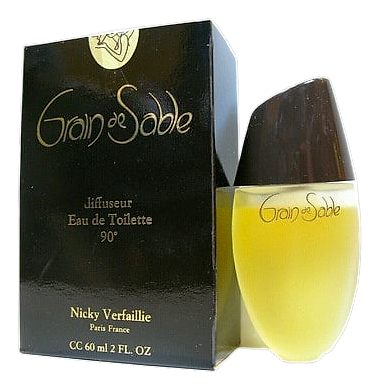
The name Nicky Verfaillie belongs to Monique Verfaillie, reportedly also referred to as Nicky, who began her career in fashion before establishing her own fragrance line in the late 1970s. Grain de Sable appeared in 1977 and became the most widely documented scent associated with the house. Its release coincided with a period when fragrance was shifting decisively toward visible, expressive compositions and bolder presentation. Grain de Folie followed early in the next decade, generally dated to 1980 or 1981, extending the house’s grain-themed naming and sensual floral language. Grain de Passion was also created during this period, though surviving listings give its release date variously as 1980 or 1985. One perfume database groups all three Nicky Verfaillie fragrances under 1977, so the exact dates should be treated with some caution. The house later entered another chapter when Rosemarie Stack, wife of actor Robert Stack, acquired distribution rights for Grain de Sable in 1984. The fragrances have remained especially visible among collectors of vintage European perfume, with surviving bottles and miniature formats helping preserve the house’s distinctive identity. Nicky Verfaillie’s creative language is most clearly expressed through the early trio of Grain de Sable, Grain de Folie and Grain de Passion. Rather than presenting a formal manifesto, the house communicates through mood, texture and imagery. Grain de Sable suggests sun-warmed skin, fruit and seduction, moving from a bright opening into a softer floral heart and warm base. The names themselves play with variations on the French word grain, giving the collection a poetic rhythm without tying each scent to a literal ingredient story. The fashion connection offers another useful lens. Verfaillie reportedly began as a fashion designer, and the perfumes share the confident sensuality of late-1970s dressing: close silhouettes, softened glamour and an emphasis on the body. This does not mean the fragrances were created primarily as fashion accessories. Rather, their visual and olfactory presentation reflects a sensibility shaped by the period. The clearest philosophy is one of atmosphere, creating scents that feel evocative, intimate and memorable through carefully balanced contrasts of fruit, floral warmth and woods.