
The Story
Why it exists.
The beginning
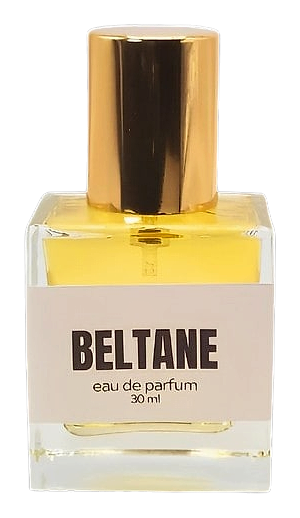
Beltane: the Celtic May Eve, when bonfires burned on hilltops and the threshold between seasons felt real. Perfumer Crystal Shelton wanted to bottle that threshold, the moment winter finally lets go. The result is a fragrance built on warm vanilla absolute, molecularly distilled frankincense from North Africa and Yemen, saffron's slow burn, and a trace of birch tar that keeps everything honest. This is the ceremonial made intimate.
The choice of molecularly distilled olibanum resin is the tell. It pulls the incense forward without drowning the composition, smoke that reads as warmth rather than haze. Paired with abundant vanilla absolute, the sweetness never turns confectionery. It's the difference between a candle and a hearth. Birch tar appears only in traces, but its smoky, slightly animalic edge is what separates Beltane from softer vanilla-leather interpretations. Small-batch handcrafting means each bottle carries the perfumer's hand directly.
The evolution
Beltane opens with presence. Frankincense smoke and pink pepper announce themselves without apology, this is not a quiet entrance. Thirty minutes in, the vanilla begins its slow reveal, darker than expected, closer to caramel than cream. The leather follows, surfacing through the smoke like something worn and loved. By the final act, benzoin and sandalwood settle into a warm, slightly powdery drydown that clings to fabric well into the next day. On some skin, that drydown arrives faster, closer to four hours. On most, it holds for six. Either way: this is a fragrance that stays.
Cultural impact
Beltane arrived in 2025 as an indie release with a built-in audience: anyone who's attended a desert gathering or burned sage at sundown. It's found its people in niche fragrance communities where smoky, leathery compositions with real character earn more love than safe designer fare. The name anchors it to something ancient; the execution keeps it modern.