The Story
Why it exists.
The beginning
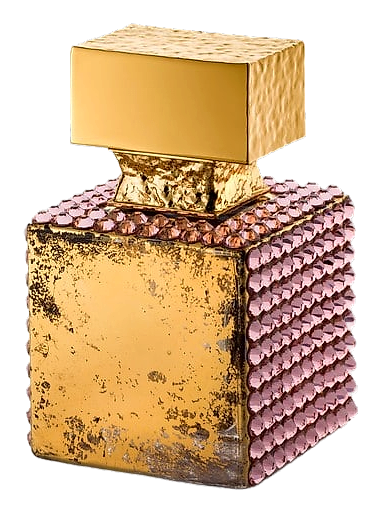
Jacaranda takes its name from the jacaranda tree, whose mauve-purple blooms have long carried associations with exotic, far-flung places. When M. Micallef set out to capture that flower in 2017, the house turned to Jean-Claude Astier, a perfumer whose palette leans toward rich, emotional compositions rather than airy florals. The brief was simple: translate a flower known for visual drama into something wearable, something that lingers on skin the way the bloom lingers in memory. Astier's work on this project drew on his longstanding relationships with material suppliers, giving him access to the rose absolutes and Indian spice oils that anchor this composition. The result is a limited edition that distills the jacaranda's lushness into something deliberate and tightly composed.
What makes Jacaranda work isn't the note list. It's the restraint. Most rose-forward fragrances crowd the bloom with supporting florals, fruit, or gourmand sweetness. Astier strips that away. The rose leads, the spices warm it, and the amber-sandalwood base gives it a grounded, almost architectural finish. The Indian spices do the heavy lifting here. They're not there to add heat for its own sake. They give the rose depth, push it away from the soapy or the synthetic, and create the bridge between the floral opening and the resinous drydown. It's a composition that knows when to stop.
The evolution
The first ten minutes belong almost entirely to rose. Not the dewy, just-cut version. This one arrives with weight, slightly jammy, almost fermented at the edges. Then the spices arrive, not as a separate layer but woven into the rose itself. There's a coolness in the mix, a warmth, something darker underneath, all blending together rather than announcing themselves as distinct ingredients. By the thirty-minute mark, the bloom has shifted. It's less flower, more atmosphere. The amber and sandalwood start to assert themselves in the second hour, pulling the composition downward into something creamy and resinous. What lingers past hour four is the drydown: a warm, golden close of sandalwood with just enough amber sweetness to keep the rose alive underneath. On fabric the next morning, it's a faint sandalwood ghost with a trace of spice still clinging on.
Cultural impact
Jacaranda sits in a specific niche of rose fragrances: the ones that treat the bloom as an occasion rather than a backdrop. It's a composition that lets the rose lead without apology, surrounding it with just enough spice and resin to give it gravity. The result reads as focused and intentional, a tightly built fragrance that doesn't try to be all things at once. The rose never feels crowded by the other notes, and the other notes never feel like afterthoughts tacked on to dress up the flower. Among M. Micallef's lineup, it stands out for its discipline, a counterpoint to compositions that aim for broader crowd-pleasing effect.