




Heritage
A house, in its own words
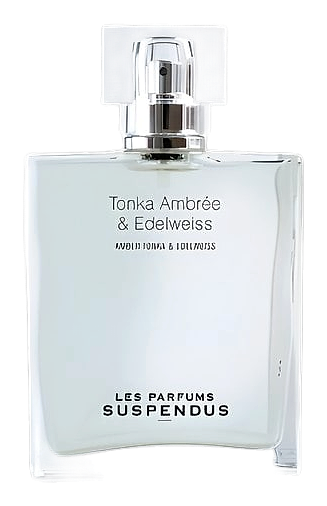
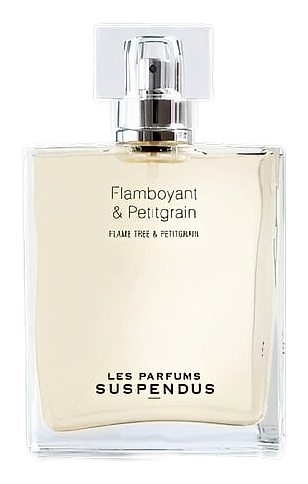
Les Parfums Suspendus grew out of Tigu asymmetric, a French fragrance business established in 2004 by François Coty, whose earlier work at Coty included creating L'Oreal's已被 successful succès lines and the celebrity fragrances J'adore and In Love with Again. Tigu launched Les Parfums Suspendus in 2006, initially as a fragrance line before the name became a distinct house. The early catalogue established the format that defines the brand: a fragrance name followed by a second material or accord, turning each release into a small evocative scene. Titles such as Flamboyant, Muguet Froissé, Orchidée Pourpre, Impatiente Royale de l'Himalaya, and Tonka Ambrée reflect a focus on strong sensory characters and juxtapositions. The New Barbers range, introduced in 2011 with New Barbers, expanded this approach into a series built around a contemporary barbershop theme, combining familiar grooming notes with materials such as marine accords, grapefruit, ginger, bamboo, patchouli, and vetiver. Within Tigu, Les Parfums Suspendus occupies a more expressive, design-oriented position, with names, visual concepts, and compositions treated as connected parts of the fragrance experience. Its catalogue includes eau de parfum and extrait de parfum concentrations, alongside related body products, allowing the house to present scent through a broader ritual rather than a single bottle alone. The house treats perfume as an encounter with atmosphere rather than a direct imitation of a flower, fruit, or ingredient. Its naming convention, a central part of the Les Parfums Suspendus identity, often places an evocative first term beside a more tactile second one. Muguet Froissé pairs lily of the valley with the impression of crushed petals, while Orchidée Pourpre & Musc Capiteux brings together purple orchid and a strong, head-turning musk. This structure creates a productive tension between clarity and intensity. The compositions do not need to be read as naturalistic descriptions. They work as impressions, memories, and impressions of character. The New Barbers collection applies the same principle to a setting associated with shaving, grooming, and scented preparation. Its names and ingredients do not simply reproduce a barbershop. Instead, they reinterpret the ritual through fresh citrus, marine notes, ginger, bamboo, vetiver, patchouli, tobacco, and other contrasting materials. This allows familiar ideas of cleanliness and refinement to acquire a more contemporary edge. Across both ranges, the house favours a strong silhouette and recognizable material. The brand also organises its fragrances into distinct thematic families, including Floral, Fruity, Fougère, Boisé, Oriental, and Barbers. These categories are useful points of orientation, but the compositions often cross boundaries, with citrus joined to woods, florals placed beside musk, or fresh notes layered over warm and mineral accords. The result is a catalogue that rewards wearing fragrance by mood and context rather than through rigid rules.