The Story
Why it exists.
The beginning
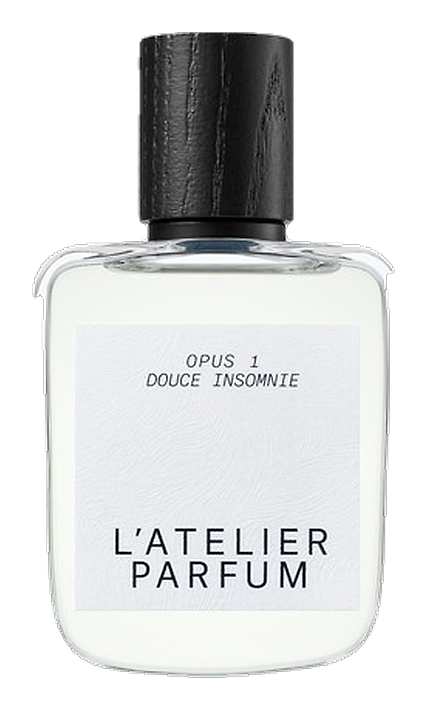
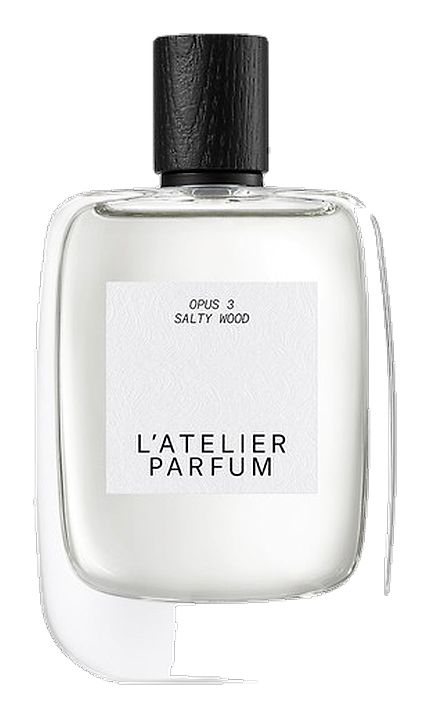
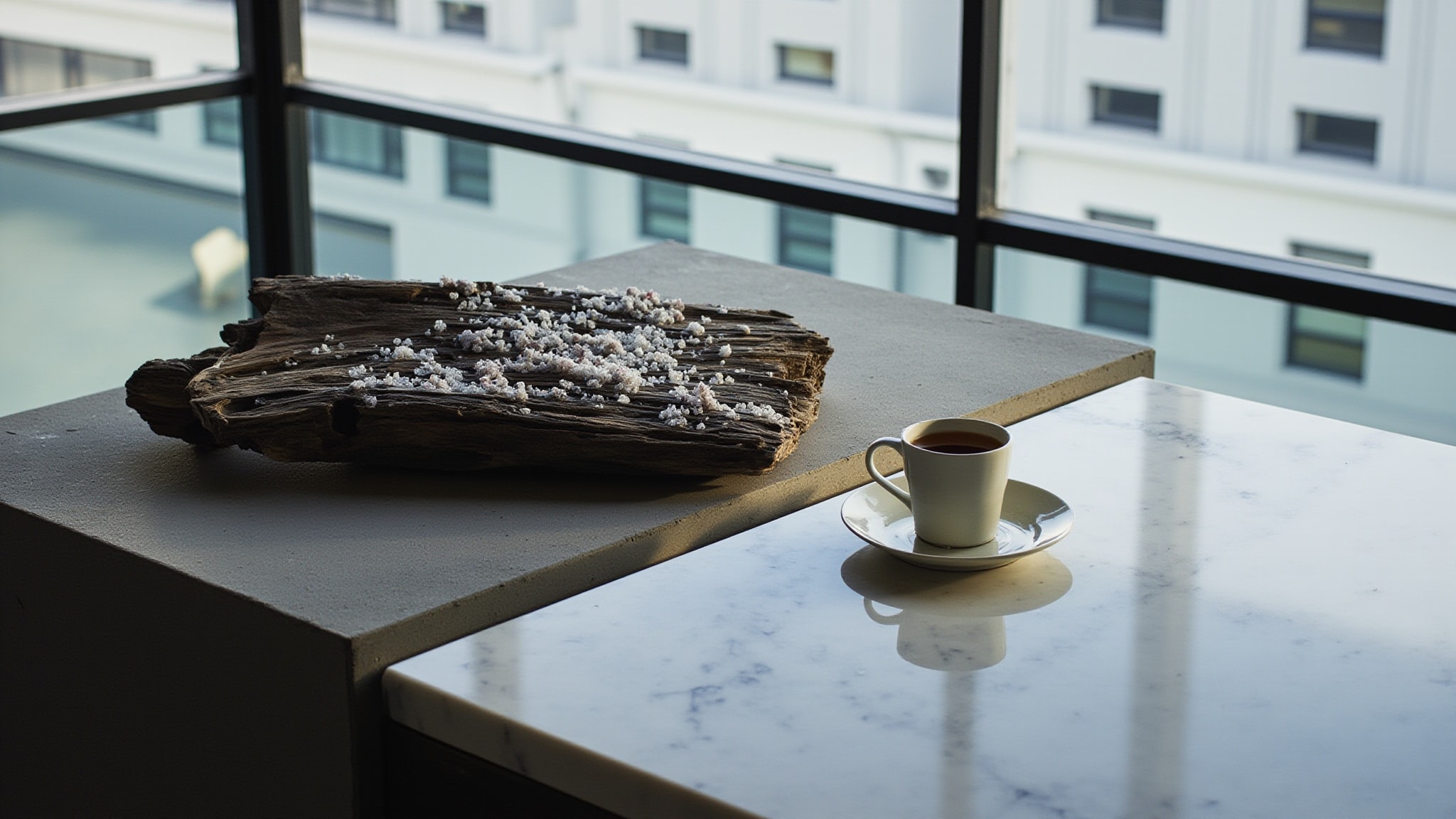
Salty Wood emerged from L'Atelier Parfum's Opus 3 collection. The note structure answers the question of sea and forest occupying the same space directly, air accord, oak, cedar, Ceylon tea, and sequoia. No filler. No hedging. The official description frames it as a moment of drifting, of letting go where sky and earth meet. That word, drift, is the key. This isn't a fragrance about arrival. The air accord opens like the moment before a wave breaks, bright and immediate, suggesting the coast before the salt arrives. Oak and cedar provide the structure, dry and warm, while Ceylon tea introduces a subtle bitterness that grounds the composition without heaviness. Sequoia rounds out the woody foundation, its mineral dryness complementing the marine elements.
The note structure is what makes Salty Wood unusual. Ceylon tea sits in the heart, an astringent, slightly bitter material that can read medicinal in lesser hands. Pair it with sea salt and sequoia, and the combination creates something mineral and warm at the same time. Sequoia brings a dry, warm woodiness that balances the tea's astringency. The composition avoids clinical precision through careful layering. With the right counterweight, the result is coherent.
The evolution
The opening announces itself clearly: ozonic air accord reads like the moment before a wave breaks. Bright. Immediate. The salt hasn't arrived yet, but the air already smells like the coast. The heart phase takes over gradually. Oak and cedar emerge, not dramatically, but with quiet insistence. The Ceylon tea adds a tannic bitterness that feels unexpected in a marine-woody context. That surprise is part of the point. The drydown is where Salty Wood earns its name. Sea salt accord mingles with sequoia's dry warmth while cashmere wood adds a subtle creaminess. The result is intimate, close to the skin, lingering quietly rather than projecting. The fragrance evolves on its own timeline, each phase revealing new dimensions of the composition. What begins as bright coastal air settles into something more grounded, the woods emerging to anchor the maritime freshness.
Cultural impact
Salty Wood occupies an interesting position, neither aggressively aquatic nor traditionally woody. The combination of tea and sea salt with wood is unusual enough to generate conversation. It positions itself as a contemplative coastal scent rather than a straightforward beach fragrance. The intimate drydown makes it a quiet presence rather than a statement piece. The sillage allows the fragrance to remain close to the skin, creating an personal experience rather than announcing itself to a room. This is the fragrance for someone who doesn't need to announce themselves.