

Heritage
A house, in its own words
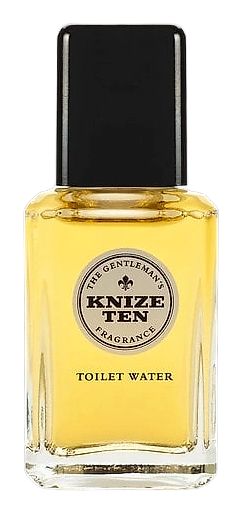
The Knize story begins in Vienna in 1858, when Joseph Knize, a tailor by trade, established his establishment in the Austrian capital. Vienna at this time served as the cultural and political heart of the Austro-Hungarian Empire, a metropolis where craft excellence was measured against the exacting standards of the Habsburg court. Knize built his reputation serving the city's elite, and his skill as a cutter and clothier attracted the patronage of discerning clients who valued precision tailoring. By 1888, this dedication to craft had earned Knize formal recognition in the form of an appointment as royal tailor to the Austro-Hungarian Court, a designation that signified both technical mastery and the confidence of imperial clientele. The house's expansion into perfumery emerged from its tailoring expertise. In the early 1920s, reportedly around 1924, Joseph Knize commissioned a fragrance specifically for his male customers. The brief was unusual for its era: a scent that would complement the experience of wearing fine tailored clothing, something that would linger in a gentleman's dressing room and become associated with the ritual of dressing. François Coty, whose influence on modern perfumery was considerable, is credited as the nose behind this creation. The resulting fragrance, Knize Ten, was groundbreaking not merely for its quality but for its intent. It represented the first fragrance conceived specifically as a masculine product, predating the mainstream marketing of men's fragrance as a distinct category by decades. Knize Ten was formulated as a leather fragrance, a choice that reflected the house's core material. Leather and suede were central to Knize's tailoring heritage, appearing in linings, accessories, and the bespoke goods that complemented its garments. The scent captured these tactile associations, translating the smell of new leather into an olfactory experience that male clients could carry with them. The formula proved remarkably durable. While countless fragrances from the 1920s have been reformulated, discontinued, or altered beyond recognition, Knize Ten has remained substantially unchanged, a testament to both the original composition's balance and perhaps the house's conservative instincts. Knize operates from a philosophy rooted in restraint and longevity rather than novelty. The house has never pursued the seasonal releases, limited editions, or celebrity partnerships that characterize much of modern fragrance marketing. Instead, Knize has accumulated a stable of perhaps a dozen core fragrances released across its 165-year history, each intended to endure rather than to capture a momentary trend. This approach reflects the values of its tailoring origins. A bespoke suit represents a significant investment, and a client purchasing from Knize expected garments that would serve them across decades. The fragrances were conceived in this same spirit: compositions meant to become familiar companions rather than passing attractions. The house's decision to maintain Knize Ten in something approaching its original form, despite the commercial pressures that have driven reformulation throughout the industry, exemplifies this commitment to continuity over reinvention. The masculine orientation of the house also reflects a particular understanding of its audience. Knize Ten was designed for men who cared about their appearance, who invested time and resources in dressing well, and who appreciated subtlety over ostentation. The fragrance has never attempted to project dominance or aggression. Its leather character is refined rather than harsh, its sillage moderate, its overall impression one of considered elegance. This restrained character has ensured the fragrance's continued relevance across generations of men who share these values, even as fragrance fashion has cycled through vastly different aesthetic preferences.