Heritage
A house, in its own words
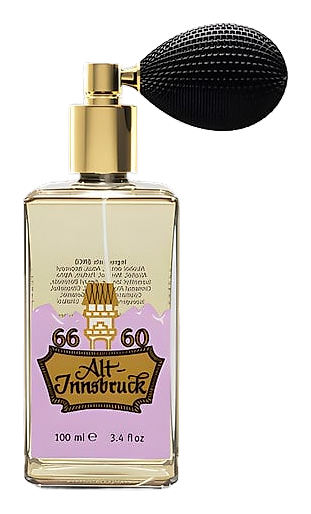
The story of Alt-Innsbruck begins in the Alpine workshops of post-war Austria, where a master druggist named Franz Gatterer devoted years to perfecting a single fragrance. Historical accounts place the formulation period in the late 1940s through the early 1950s, a time when Austrian artisans still operated within traditions that blended pharmaceutical precision with sensory craft. Gatterer reportedly worked as a master Austrian druggist, bringing that profession's rigorous attention to measurement, purity, and effect into his fragrance work. The result emerged as the Alt-Innsbruck Eau de Cologne in 1953, a scent built around two dominant notes: tobacco flower and menthol. This was not a perfume meant for evening occasions or special events. It was designed for the morning ritual, for the barbershop, for the man who wanted to smell clean, sharp, and present. The fragrance found its natural habitat in traditional wet shaving culture, where menthol's cooling properties served a practical purpose alongside the aromatic. For roughly four decades, the scent remained a steady presence in Austrian barbershops and grooming routines. By the 1980s, it had developed into something of a cult item, appreciated by those who valued its simplicity against the growing complexity of the fragrance industry. The house never expanded beyond its single offering, a decision that now reads as either restraint or limitation depending on perspective, but which ensured that the original vision remained untouched by later reinterpretation or commercial dilution. Alt-Innsbruck operates from a philosophy of sufficiency rather than expansion. Where most fragrance houses develop collections, seasonal limited editions, and flankers to maintain visibility, this Austrian house released one scent and let it speak for itself. The philosophy, if it can be called that, appears to be rooted in the Alpine tradition of making things that work. Menthol cools. Tobacco scents. The combination serves a function within the grooming ritual. There is no pretense of artistic statement or emotional narrative attached to the fragrance. It does not promise transformation or attempt to construct an elaborate identity around itself. For those who wear it, the appeal lies precisely in this directness. The scent asks nothing of its wearer except appreciation for what it is. The wet shaving community has embraced this philosophy, finding in Alt-Innsbruck a counterpoint to the marketing-heavy fragrance industry. A fragrance without a story to sell is, in some circles, more valuable than one with elaborate branding. The brand's longevity suggests that this approach resonates, even if it has kept Alt-Innsbruck outside mainstream fragrance consciousness.