
The Story
Why it exists.
The beginning
Paradise no People sits inside a 1980s French catalog that didn't do small. Jean-Marc Sinan built a fragrance house during that decade, and his compositions carry a distinctive weight. The collection emerged through the '80s, sharpening its identity with each successive release, and Paradise no People carries that signature confidence, a floral for women that owns every inch of its projection. There's nothing tentative about the way this composition introduces itself, nothing skirting the edges of its own brief. It opens like it already knows exactly where it intends to land. The citrus arrives assertive rather than fleeting, the pepper arrives on cue, and the whole thing behaves as though it was designed by someone who trusted the structure to hold. No hedging, no restraint, no apologies.
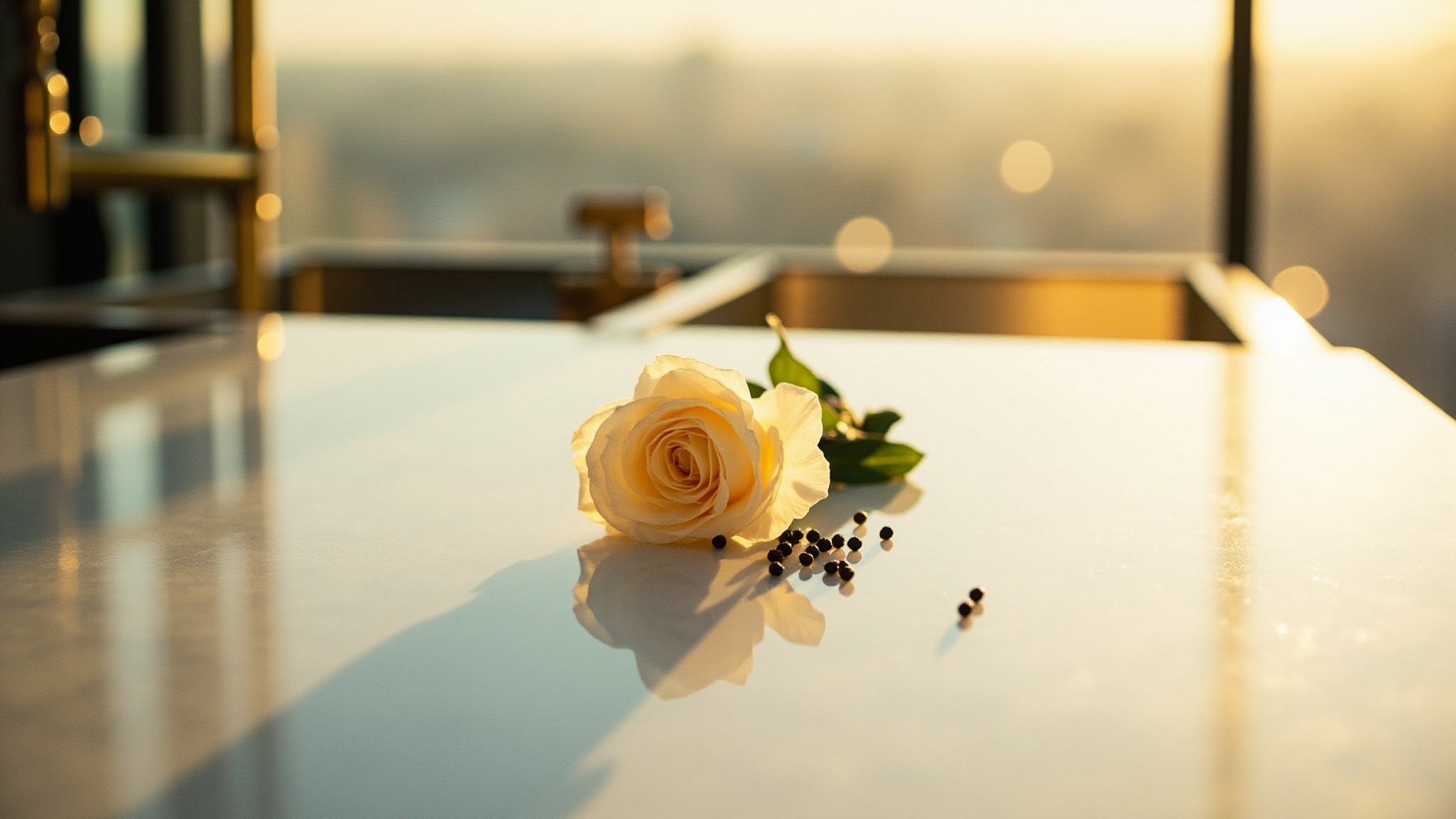
What makes this composition worth a second look is the tension baked into the pyramid. Bergamot and rose give you the expected French opening, almost too neat. But black pepper bites early, and patchouli anchors everything with a dry, earthy drag that keeps the jasmine from floating off into wedding-bouquet territory. That gap between the floral surface and the assertive base is where the actual perfume lives. The white florals stay creamy rather than soapy because of how patchouli grips them from underneath.
The evolution
The opening plays bright and sharp. Bergamot cuts through with a citrus snap, then black pepper arrives almost immediately, giving the first impression an unexpected crackle. There's something almost cologne-like about the top before the flowers arrive. As the composition settles, rose and jasmine unfold into a rounded, creamy white floral heart that softens the initial bite without losing the energy. The lily adds a green coolness that keeps the bouquet from going soapy, a little herbaceous lift sitting between the rose's warmth and the jasmine's indolic sweetness. Cedar pushes upward through the petals, a structural thread that keeps everything tethered rather than letting the florals drift. Patchouli is patient.
Cultural impact
Paradise no People sits in a strange and appealing corner of the Jean-Marc Sinan catalog, a white floral that doesn't behave like one. Within the house's broader output, it's the composition that pushes back against the prettiest versions of the genre. The cedar-patchouli backbone marks it as something more architectural than the gentler florals tend to be, giving it presence that holds up in cooler weather when lighter compositions tend to disappear. It rewards wearers who want their florals to project, who want jasmine and rose to read across a room rather than only at conversational distance.