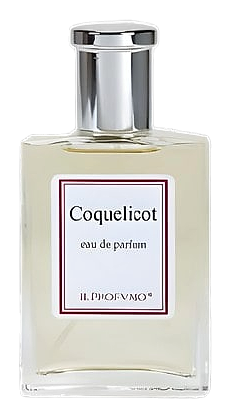

The Story
Why it exists.
The beginning
Il Profvmo's Multiflor Line explores flowers with something to say beyond their petals. Coquelicot, launched in 2008, is Silvana Casoli's study of the poppy, not the poppy in a Monet painting, but the poppy that grows at altitude, where the air thins and everything becomes more. Casoli chose the Himalayan blue poppy, Meconopsis grandis, a flower most people have only seen in photographs. She put it at the center of a composition built on restraint: melon and bamboo leaf for brightness, then that cool blue heart that smells like thin air and high places. The name means 'corn poppy' in French. The fragrance is entirely Italian.
Silvana Casoli spent three years sourcing materials before composing Coquelicot, traveling to Tibet's Himalayan slopes to study the blue poppy in its native altitude. The melon note came from Italian cantaloupe extract, chosen for its watery sweetness rather than the saccharine character of synthetic melons. Bamboo leaf was sourced from a single supplier in Japan, processed within 48 hours of harvest to preserve its green, slightly astringent quality. The combination produced something that smelled less like a perfume and more like the moment after rain clears, when the air carries both moisture and the first suggestion of warmth. Casoli described it as 'an exhale rather than a statement.'
The evolution
The first minutes are melon and bamboo leaf, bright, almost aquatic, no citrus sharpness. Then the blue poppy takes over, and it reads less like a typical floral heart and more like the smell of altitude. Clean, slightly cool, with an almost mineral quality. The transition isn't dramatic. The brightness simply makes room. By the third hour, amber arrives, warm, clean, the kind of base that makes skin smell like it hasn't been wearing anything at all, just warmth. Longevity sits around four to six hours on most skin. The sillage never pushes. This is a fragrance that stays close, then closer, then becomes part of the wearer.
Cultural impact
Coquelicot sits quietly in the Il Profvmo catalogue, released in 2008 before the niche boom made houses like this famous. The Tibetan blue poppy is an unusual choice for a mainstream floral, it reads cool and slightly alien, not safe or crowd-pleasing. That makes it the kind of fragrance collectors seek out when they want something that doesn't smell like everything else. The house's positioning has always been the serious collector who treats scent as craft, and Coquelicot fits that posture precisely.