
The Story
Why it exists.
The beginning
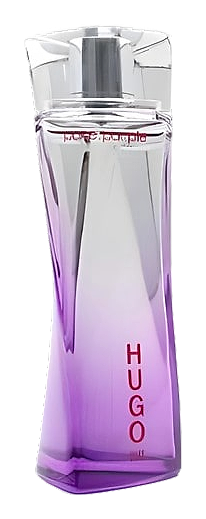
Hugo Boss entered the women's fragrance space in 2006 with a question: what does tailored confidence smell like when it isn't trying to impress anyone? Pure Purple was the answer, a fruity-floral that refused to stay within the lines of its genre. The name itself is a statement, a declaration that purple doesn't belong only to evening or to youth. It belongs to the woman who shows up and owns the room without announcing herself. The bottle, designed by Lutz Herrmann, kept things architectural and clean, heavy glass, precise lines, seductive purple, letting the juice inside do the actual talking. In 2006, the market was crowded with safe florals and predictable fruity chypres. Pure Purple was neither. It was something stranger, something warmer, something that understood women don't always want to smell like flowers.
What makes Pure Purple work, and what makes it controversial, is the marzipan. Marzipan is almond, sugar, warmth. It's the inside of a confection, sweet and edible. Leather is the opposite: worn, animalic, hard-edged. Putting them together shouldn't work, except that Hugo Boss had the right instinct. The marzipan doesn't go gourmand in the way vanilla or tonka might. It stays nutty, slightly bitter, grounded. The leather doesn't go masculine in the way oud or tobacco might. It stays soft, worn, almost suede. Between them, black violet adds a powdery floral note that bridges the gap, cool enough to let the warmth breathe, present enough to keep things feminine.
The evolution
The opening hits bright and clean, nectarine's sweetness, cyclamen's cool aquatic undertone. It's the part most people remember as "pretty" and move on. Then, within minutes, black violet takes over, and something shifts. The sweetness deepens into something nuttier, warmer. The florals stop being decorative and start being structural. By the time the marzipan arrives, and it arrives quietly, not with fanfare but with insistence, the fragrance has already decided what it's going to be. The leather follows, not harsh, but present like the interior of a well-loved bag. Amber wraps everything in warmth that lingers. On most skin, you're looking at 4-6 hours of something that stays close, intimate, impossible to ignore if you're standing close enough to matter.
Cultural impact
Pure Purple never reached the iconic status of Boss Bottled or the Boss Orange line. What it did achieve was something rarer: a cult following that kept the fragrance alive long past its discontinuation. In fragrance communities, it's discussed with the reverence usually reserved for discontinued gems, the kind of scent people hoard, share stories about, and warn each other to track down before the last bottles dry up. It's not for everyone. That's exactly why it matters.