
The Story
Why it exists.
The beginning
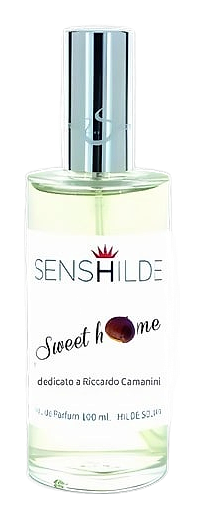
Sweet Home arrives in 2017 as Hilde Soliani's most direct olfactory statement yet, a fragrance named for a feeling rather than a place. By this point, her Senshilde line had already proven her ability to translate food memories into something wearable. Sweet Home narrows the focus to two notes and lets them speak plainly. Chestnut and sugar. That's it. No elaborate concept, no theatrical twist, just the honest smell of something warm coming from the kitchen.
What makes this composition interesting isn't complexity but commitment. Chestnut carries a natural bitterness that many perfumers bury under vanilla and cream, Hilde lets it sit, giving the fragrance a nutty backbone that prevents the sweetness from floating away entirely. Sugar does what sugar does: it makes everything taste more like itself. The synthetic and balsamic accords in the base keep the whole thing grounded, warm, and just dry enough to feel real rather than cartoonish. It's a study in restraint within a genre that often forgets the word exists.
The evolution
Sweet Home opens soft. Not shy exactly, but like stepping into a room where something's been in the oven and isn't quite done yet. That buttery quality, the thing reviewers call almost-too-real, takes a few minutes to settle into the skin. Then it warms. The chestnut and sugar begin to merge into something skin-adjacent, less pastry, more the warmth of a body in a cold room. By hour three, the drydown arrives, a soft amber that stays close, intimate, the kind of sweet that clings to wool and scarves. Lasts six to eight hours on most skin, though some report it pulling toward the shorter end. The arc is consistent: sweet becomes warm becomes quiet becomes you.
Cultural impact
Sweet Home arrived in 2017 as part of Hilde Soliani's ongoing exploration of food-inspired fragrance, placing it within the broader gourmand movement that has shaped contemporary Italian perfumery. Where many niche houses chase complexity, Soliani chose radical minimalism with just two notes, chestnut and sugar. This two-note simplicity reflects a deliberate move toward directness in the brand's edible line, challenging the assumption that gourmand fragrances need layers of supporting accords to feel complete. The cultural context matters: by 2017, edible scents had moved beyond their playful reputation to become considered a legitimate artistic category.