
The Story
Why it exists.
The beginning
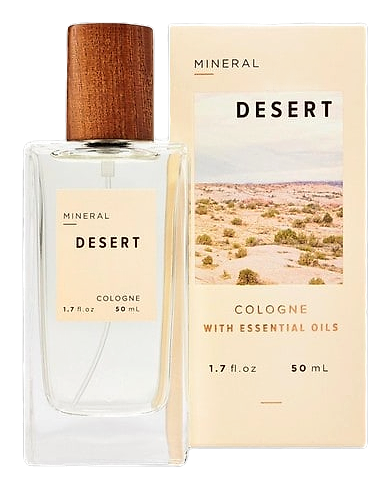
Good Chemistry's first wave of personal fragrances included Mineral Desert alongside Wild Child, Brainiac, Rustic Woods, Vanilla Orchid, Water Lily, and Gardenia Palm. The name posed an immediate question: what does a mineral desert actually smell like? Not an easy answer. The desert isn't one thing, it's hot stone and cold air at night, the ghost of moisture in cracked earth, the green surprise of something surviving where nothing should. Oakmoss brings the mineral-earth quality, the smell of stone and lichen that makes a place feel ancient. Musk settles everything into skin, making it human. Mineral Desert isn't sweet, isn't aquatic, isn't the safe choice. It's the one you'd reach for when you want something that smells like the world before you walked into it.
What makes Mineral Desert interesting is the contradiction at its core. The name suggests heat, aridity, stone, nothing alive. But the actual fragrance is remarkably green. Orange leaf isn't dried citrus peel; it's the fresh, almost bitter green of an orange tree's leaves, the ones you smell when you crush them between your fingers. Oakmoss is damp earth and lichen, not the dry dust of sand. The musk keeps everything human, warm, alive. This is why the fragrance works: it takes the idea of a mineral desert, geological time, survival, beauty in hostile environments, and translates it through green life. The desert survives. So does the fragrance, long after the citrus fades.
The evolution
The opening hits with orange leaf, bright and green, almost astringent. Not sweet. Not fruity. The sharp clarity of crushed leaves carries a citrus edge that feels more like sunlight on green things than actual fruit. For a while, this remains a green fragrance, sharp and alive, surprising in its vitality. Then the oakmoss begins to assert itself. Slowly, almost grudgingly, the greenness deepens and darkens. The citrus retreats but doesn't disappear, still there, muted, like sunlight filtered through dust. The oakmoss brings a mineral quality that's hard to describe: the smell of old stone, of lichen on a tomb, of damp earth in a place where rain hasn't fallen in months. This is the desert revealing itself. The musk takes over as the composition settles. Not animalic, not aggressive, just warm skin, the quiet intimacy of a fragrance that's decided to stop performing and start lingering.
Cultural impact
Mineral Desert arrived as accessible fragrance brands challenged traditional perfume industry gatekeeping. Good Chemistry offered a gender-neutral alternative to conventional luxury perfumery, and Mineral Desert exemplified that approach with its stripped-back, chypre-leaning structure. The fragrance embodies a preference for authentic, less-is-more scents over maximalist, projection-heavy formulas. Its simple orange leaf, oakmoss, and musk triad resonates with wearers seeking honest, grounded fragrances that prioritize substance over spectacle.