





Heritage
A house, in its own words
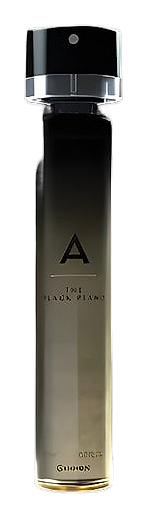
The house traces its origins to Madrid, with a documented address at 10 Paseo de San Bernardino dating to 1917. By 1921, the business was established under Count Jean de Galimard, a figure tied to the early Spanish perfume aristocracy. The eponymous fragrance Gammon was launched as a USA-market name, a transatlantic gesture that signaled from the start the brand's awareness of American tastes while remaining grounded in Madrid. The move between continents, from a Paseo address in Madrid to a U.S. branded launch, set the tone for what became a house comfortable with cultural cross-pollination. Subsequent decades saw the original Gammon line continue under its American-facing identity, even as the parent operation stayed rooted in Spanish perfumery tradition. The current chapter, the black wardrobe series, dates to 2018, when releases like The Black Tee, The Black Suit, The Leather Jacket, and The Black Hoodie debuted. Each name in the collection appears to be treated as a character study rather than a conventional fragrance, a deliberate deviation from the heritage house's earlier, more classical positioning. That pivot, from a single named launch to a numbered wardrobe of black-themed scents, marks the clearest evolution in the house's recorded story. Gammon's creative thesis is built on translation: turning mundane, tactile objects into scent. A hoodie, a leather jacket, a drum kit, a saxophone, a piano, each becomes the conceptual brief for a fragrance, and the color black runs through all of them like a unifying thread. The black palette is not incidental; it functions as a visual manifesto, suggesting that the house sees its work as nocturnal, tactile, emotionally direct. By naming scents after articles of clothing and instruments rather than abstract nouns or exotic places, Gammon positions itself close to the wearer, closer to the body and the objects a person touches every day. This is perfumery treated as character design. The wardrobe metaphor implies choice: you pick a fragrance the way you pick what to wear or what instrument to play, which is a quietly democratic idea in a category often dominated by aspirational language. The instrument selections, The Black Sax, The Black Piano, The Black Guitar, The Black Drums, extend the philosophy beyond clothing into sound, suggesting that scent, like music, is a mood, a tempo, a scene rather than a static descriptor.