Heritage
A house, in its own words
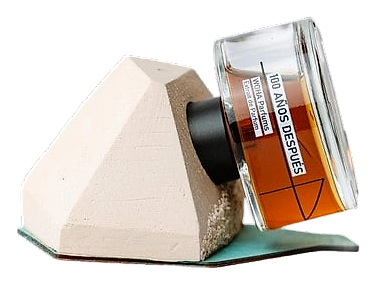
WOHA Parfums grew out of World Of Holistic Architecture, an architectural studio based in Elche, Spain, in the country's Valencian region. Founding partner and creative director Antonio Maciá Mateu guides the project, where the practice of building space and the practice of composing fragrance share a common origin. The studio's approach to architecture, attentive to materials, light, and how rooms shape the way people feel, carries into a line of fragrances developed as designed environments in perfume form. The house's most talked-about release, 100 Años Después, draws on a specific building in southern Alicante: a home constructed around a century ago near an alfalfa field in the huerta, later remodeled in the 1940s and marked by generations of change. Notes of melon and fig anchor the composition to the landscape and domestic detail surrounding that place. The story was first encountered by many fragrance enthusiasts at Pitti Fragranze, where the brand became a discovery for collectors. Rather than following a familiar path of heritage storytelling, WOHA builds its identity from observation. Its history starts with a studio and a building, then translates both into scent. At WOHA Parfums, fragrance is approached as another material to design with. That framing sets the house apart from perfume labels that begin with a mood or a trend. Here, each composition starts from a place and the decisions made within it: a house's proportions, the agricultural fields around it, the quality of light passing through a room, the sense of memory attached to a wall or a garden. Antonio Maciá Mateu, the studio's founding partner and creative director, has described the project as an investigation into how scent can carry the atmosphere of architecture. The work borrows the logic of the studio rather than imitating its output. A perfume, in this reading, functions like a built space. It has structure, thresholds, passages, and a particular way of making someone feel when they enter. This gives the house a quiet, cerebral character. The references are concrete and rooted, drawn from specific landscapes and buildings in southern Spain, yet the results invite interpretation rather than literal reconstruction. WOHA offers architecture translated for the skin, where you carry a place with you.