
The Story
Why it exists.
The beginning
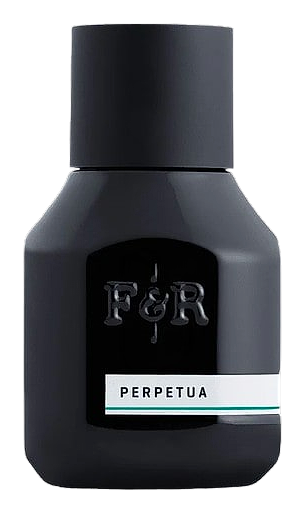
Cape Perpetua rises 800 feet above Oregon's Pacific coast, a peak thick with enormous evergreens, yet open to salt air and endless horizon. The landscape itself is an argument: dense evergreen forest, ocean as far as the eye can see. Two worlds refusing to be one thing. Fulton & Roark named this fragrance after that ridge because the composition does the same thing. Bright neroli and lemon open like a clearing in the trees. Jasmine and amber settle in like warmth on skin. Cedar and coumarin ground it all in something that doesn't quite fit the mold.
What makes Perpetua work is the timing. The citrus-bright opening doesn't announce itself with fanfare; it's immediate but not aggressive. The jasmine arrives quietly, wrapping around the amber in a way that feels less like a note transition and more like two things settling into the same chair. Then the base arrives, atlas cedar's dry wood, coumarin's subtle hay-like sweetness, and the fragrance remembers it was born on a coast. The structure isn't layered so much as braided. Nothing overpowers. Nothing disappears.
The evolution
The opening hits like morning air off the Pacific, neroli and lemon arriving together, clean and slightly bitter in that way real citrus is. The jasmine takes the stage with an underlying richness that adds weight without sweetness. Amber threads through, giving the heart a golden quality. Then comes the turn, as atlas cedar begins asserting itself, dry and slightly resinous, a grounding force. The coumarin is subtle, a whisper of sweet hay that adds intrigue rather than bulk. By the time the fragrance has settled into its drydown, cedar is dominant, coumarin still detectable as a soft warmth, jasmine lingering in the background like a memory. On fabric, this lasts well into evening. On skin, the citrus opening fades first, but the wood-floral base carries through for hours, sometimes longer on pulse points.
Cultural impact
Perpetua arrived as Fulton & Roark's extrait de parfum, marking an expansion beyond the solid cologne format that built the brand's reputation. The move reflects a broader industry shift toward higher-concentration fragrances that offer greater longevity without the alcohol-heavy projection of traditional eau de parfum. Fulton & Roark had built its following on practical, pocket-friendly solid fragrances that rejected the excess of conventional perfumery. The extrait release showed the brand could deliver richness and depth while maintaining its core identity of understated confidence.