The Story
Why it exists.
The beginning
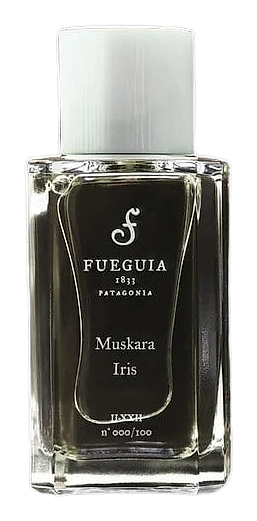
Muskara Iris arrived in 2017 as part of Fueguia 1833's Muskara collection, a series built around single botanical materials given room to speak. Julian Bedel, who founded the Argentine house, treated orris as the kind of raw material that punishes over-blending. The composition uses Iris pallida and Iris germanica, two botanical varieties of the same flower, extracted and presented in their most unadorned form. There is no marketing narrative about a specific field or harvest. The point is the material itself, rendered clean, dry, and precise. The focus rests entirely on what the rhizome offers without interference, allowing the carrot-like sweetness of pallida and the drier, more root-bound character of germanica to carry the composition in tandem.
Both Iris pallida and Iris germanica appear in the composition, two varieties that share a carrot-like earthiness but carry slightly different facets, one a touch more floral, the other more root-bound. That combination, without ornament, is the whole gesture. The interplay between the two is subtle, almost geological, as if two layers of the same soil have been pressed into a single page. The floral note from pallida lifts the composition just enough to keep it from feeling subterranean, while germanica anchors everything with a denser, earthier pull.
The evolution
On skin, Muskara Iris opens with a dry, almost chalky iris note that smells less like a flower and more like the rhizome pulled from cold ground. There is a faint vegetal quality, slightly carroty, that lasts through the first hour, then recedes. The heart is where orris takes its classic turn, powdery, cool, with a mineral edge that reads more like stone than suede. It is not the cosmetic powder of a department-store iris. It is closer to the dust on a dried root. The drydown settles into a quiet, almost soapy musk that keeps the composition close to skin. Sillage is moderate at best, an intimate cloud that someone leaning in would catch, not something that fills a room. The next morning, a trace of the powder remains on fabric, faded, warm, and slightly sweet. It does not project on day two. It remembers.
Cultural impact
Muskara Iris treats iris as a raw material to be respected rather than prettified. It appeals to those drawn to the botanical side of perfumery, people who would rather smell a root than a flower and call it luxury on their own terms. The Muskara collection as a whole, of which this is a part, offers a particular kind of iris experience, one that prioritizes the unadorned material over conventional sweetness. The appeal lies in its refusal to dress up the orris note with violet confections, sucrose, or cosmetic powder.