


Heritage
A house, in its own words
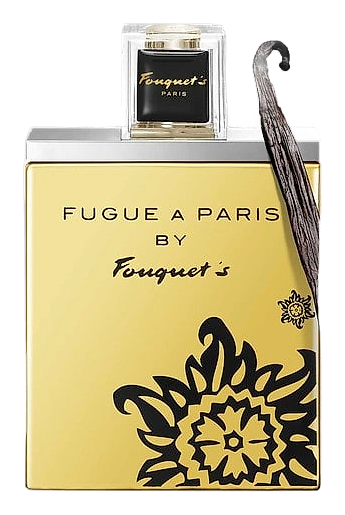
The origin story of Fouquet's is inseparable from the founding myth of Eight & Bob. Albert Fouquet, born into Parisian high society in the early 20th century, cultivated perfumery as a private pursuit, formulating scents at his family's estate rather than for commercial sale. In 1937, while traveling on the French Riviera, he encountered a young American student named John F. Kennedy and offered him a sample of his personal cologne. The encounter reportedly led to requests from other American visitors, and Fouquet agreed to prepare small batches, packaging them in a numbered edition. The original formula, later known as Eight & Bob, was never publicly sold during Albert Fouquet's lifetime. Decades later, the formula was rediscovered, and Eight & Bob was launched as a commercial brand. In 2013, the house expanded its universe with the Fouquet's collection, a line of place-inspired fragrances including Fugue a Paris, French Riviera, Lune d'Été, Rose de Marrakech, and Jardins du Sud. The Fouquet family also owned a château in Burgundy, where Albert would oversee the grape harvest each September, an environment that reportedly shaped his sensitivity to natural raw materials and the rhythms of the agricultural calendar. Fouquet's treats perfumery as a form of personal correspondence, a way of bottling a place, a season, or a memory for someone specific rather than for an anonymous mass market. The house's creative vision is rooted in the idea that fragrance can serve as a portrait of a location, with each composition in the Fouquet's collection keyed to a particular coordinate: Paris in motion, the sunlit coastline of the Côte d'Azur, a midsummer evening, the rose gardens of Marrakech, the vegetal landscapes of southern France. This geographic specificity reflects Albert Fouquet's own approach, treating scent as something to be shared among a cultivated circle rather than broadcast widely. The brand's values center on discretion, lineage, and a belief that the most compelling fragrances carry a trace of the person who wore them first. Rather than chasing trend cycles, the house positions its work as a continuation of a private artistic practice opened to a wider public.