The Story
Why it exists.
The beginning
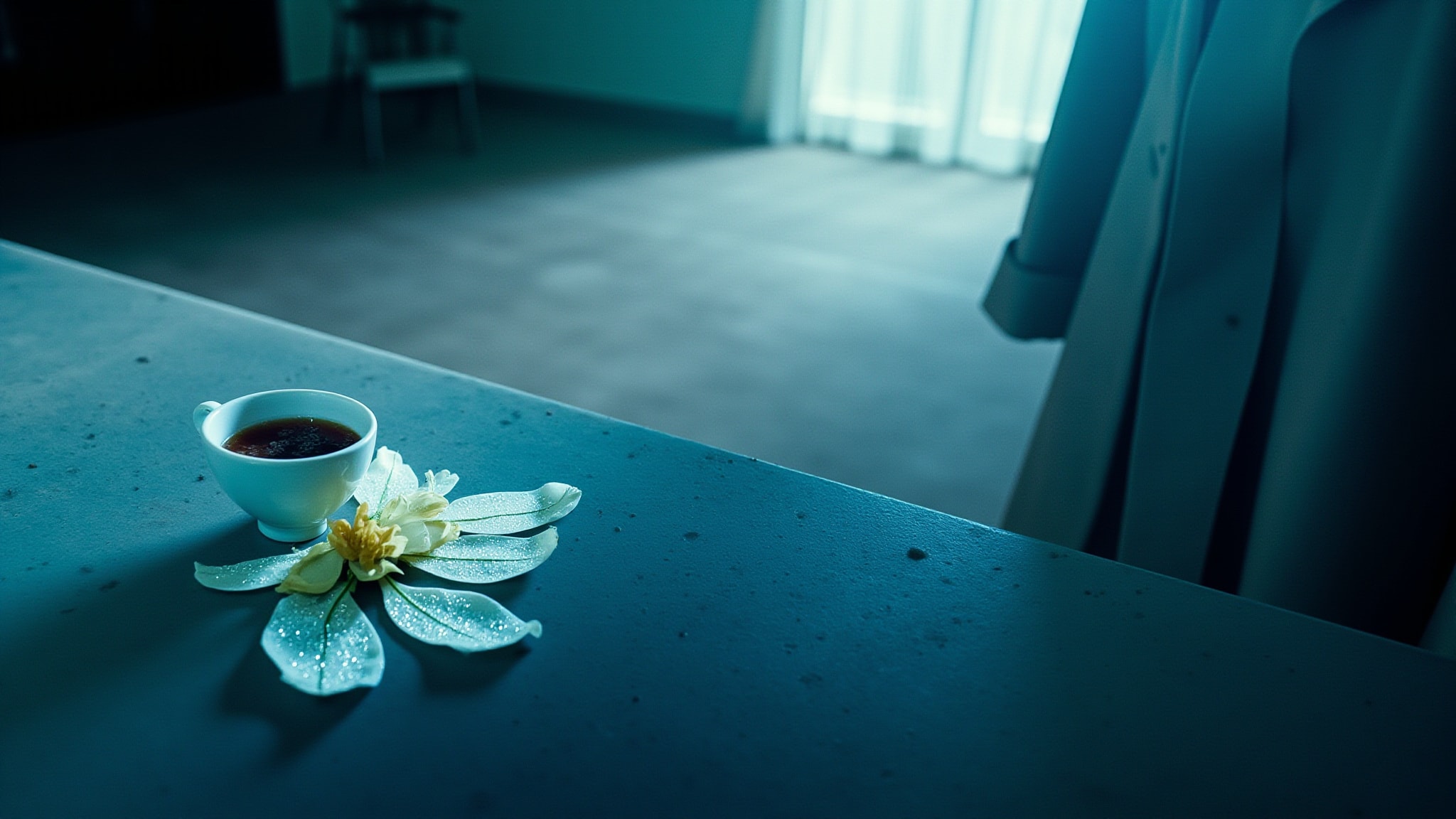
Fang Fang named this one in three parts. Jasmine, from the night-blooming fields of Taiwan. Tea, from high-altitude gardens. And something the moonlit hour supplies that defies easy naming. The brand's house concept translates Taiwanese landscapes into scent narratives, but Jasmine Tea On The Moon feels more like a mood than a map. Stillness. Observation. The 3 AM quality of air that's cooled past memory. The perfumer assembled this as an exercise in restraint. White florals, jasmine, tuberose, carry inherent weight. The trick was creating breathing room without losing warmth. Magnolia leaf and pink lotus add a green, slightly aquatic lift that keeps the composition from settling too heavily. White tea and guaiac wood anchor the drydown, creating something mineral and intimate rather than projecting and bold. Fang Fang has described the brand's creative process as olfactory sketching, capturing a moment rather than engineering a performance.
The white tea note is doing something unusual here. Most fragrance tea accords skew warm or astringent, they recall the drink, not the leaf. Jasmine Tea On The Moon treats white tea as a solvent, something that cuts through the floral sweetness without replacing it. The ozonic accord amplifies this: not oceanic in the conventional sense, but atmospheric, the way air feels different at altitude or after rain. Guaiac wood is the quiet structural choice. It's not a loud material, it doesn't announce itself the way oud or sandalwood might. Instead, it provides a woody-mineral foundation that makes everything above it read cooler, clearer.
The evolution
The opening announces itself bright and clear. Jasmine and tuberose arrive together, not competing, but harmonizing in a sweet, slightly green register. The tuberose adds a milky undertone that tempers jasmine's sharper facets. At first, this is a white floral at its most accessible. Then the transition begins. Magnolia leaf emerges slowly, introducing a cool, slightly damp greenness that changes the composition's temperature. The florals do not disappear, they recede, becoming a soft warmth beneath the green. Pink lotus adds a watery, almost translucent quality at this stage. The heart reads clean and luminous, closer to morning than evening. The drydown is where the white tea takes over. Not as a drink, as a sensation. Something mineral and cool, with a slight astringency that mimics the clarity of a high mountain morning. Guaiac wood settles quietly into the base, adding a woody warmth that prevents the whole composition from reading as cold. This is an intimate drydown. It stays close to the skin.
Cultural impact
Jasmine Tea On The Moon arrived in 2020 as part of Fang Aromatherapy's second collection, alongside scents named for Taiwanese Mermaid, Formosa Butterfly, and Taiwanese Cupid. For those discovering the house without prior exposure, the fragrance's white tea and ozonic qualities can read as meditative rather than familiar, an atmospheric scent that rewards attention over performance. The brand occupies a quiet corner of the niche market, appealing to collectors who prize sensory stillness over statement fragrances.