The Story
Why it exists.
The beginning
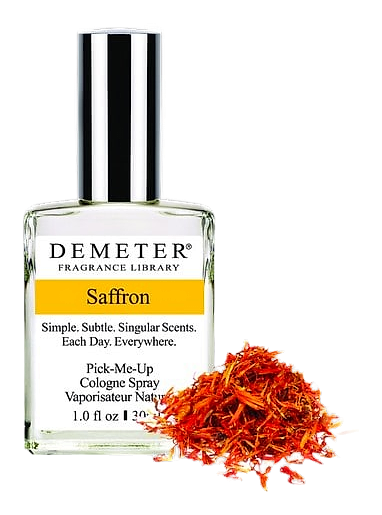
Saffron arrived in Demeter's catalog in 2016, joining a library of single-note scents that treats everyday ingredients and the world's rarest spices as equals on the shelf. The concept is simple: take one material, isolate it, let the wearer experience it whole. With Saffron, the material happens to cost more than its weight in gold. The brand's whole pitch has always been that a smell can be a moment, not a performance. Thunderstorm. Kitten Fur. Funeral Home. The catalog leans toward the curious, sometimes the absurd. Saffron sits closer to the curious end, an offering for someone who has smelled saffron in a dish and wondered what would happen if that flavor lived on skin for an afternoon.
Saffron occupies a peculiar corner of perfumery, and Demeter's take on it leans into that peculiarity rather than softening it. Most fragrances that reference saffron treat it as a supporting player: a smoky accent, a bridge note, a flash of golden color that vanishes once the heavier materials arrive. By presenting saffron alone, Demeter removes the usual supporting cast. No oud underneath, no rose on top, no amber to round the edges. Just the spice in its own voice, which turns out to be more varied than most people expect.
The evolution
The opening is the brightest the scent will get. Saffron arrives with a lift that's almost startling, then softens quickly into something warmer and rounder. The dry, faintly spiced quality of the note surfaces early, giving the saffron a quality that feels both grounded and alive. The initial brightness soon recedes, and what remains is a warm, steady saffron hum close to the skin, the way the spice smells when you crush a thread between your fingers and wait. This is where the fragrance lives for most of its run, a steady warmth that doesn't project far but doesn't disappear either. The drydown is where saffron loses its lift and becomes quieter still. It settles into a faintly dusty warmth, the ghost of the spice rather than the spice itself. On fabric the next morning, there's a trace left behind, a saffron shadow that survives the wash cycle if you're lucky.
Cultural impact
Saffron sits in an unusual spot on the fragrance shelf. Demeter strips the usual scaffolding away and offers saffron as the whole show, which makes it less a competitor to mainstream saffron fragrances and more a reference point for what the spice actually smells like on its own. It's a study in clarity, a chance to experience a material without the usual perfumery context clouding your impression. The appeal is straightforward: no occasion required, no status sought, just an interest in how a familiar spice behaves when it's not hiding behind anything else.