
The Story
Why it exists.
The beginning
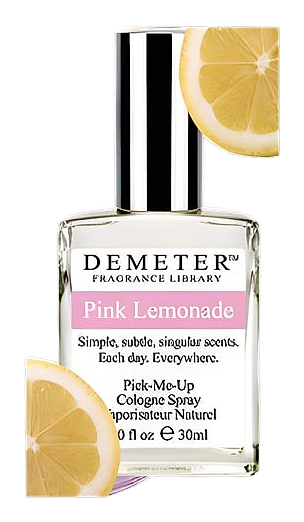
Pink Lemonade was born from Demeter's most direct instinct: if four ingredients make the real drink, four notes make the real scent. The brand spent years proving that a fragrance didn't need ten layers of nuance to be worth wearing. Pink Lemonade is the argument in its simplest form, lemons, water, sugar, grenadine. The question wasn't whether it could be done beautifully. It was whether anyone wanted something this honest. The answer arrived in 2004 and never really left.
What's unusual here isn't the notes, it's the restraint. Grenadine, the syrup made from pomegranate, carries a tart-bright edge that most perfumers would bury under florals or woods. Demeter let it sit on top. Sugar sweetens without cloying. The Amalfi lemon gives it that Mediterranean warmth rather than the sharp industrial citrus you find in cleaning products. And the water note, that's the invisible piece, the one that makes it feel like you're smelling condensation on a glass, not just the drink inside it. Four notes. Four collaborators. No room for pretense.
The evolution
The opening is the whole story. Amalfi lemon zest hits sharp and immediate, the kind of brightness that makes you lean in. Sugar follows within seconds, softening the tart edge into something rounder. Then the grenadine settles, and here's the thing: it doesn't deepen so much as it diffuses. The sweetness spreads thin across the skin, mixing with the water note until the whole composition feels like it's evaporating rather than fading. One to three hours is the honest window. On clothing, maybe four. But the real move is reapplying, and Demeter knows this, which is why the bottle's small and the price is kind.
Cultural impact
Pink Lemonade occupies a specific corner of the fragrance world: the one Demeter built. It's worn by people who found conventional perfume intimidating and by those who just wanted to smell like summer. The brand's catalog of 300+ scents has always attracted curiosity over loyalty, and this one sits near the top of the list for people trying Demeter for the first time, not because it's the best, but because it's the easiest to explain.