
The Story
Why it exists.
The beginning
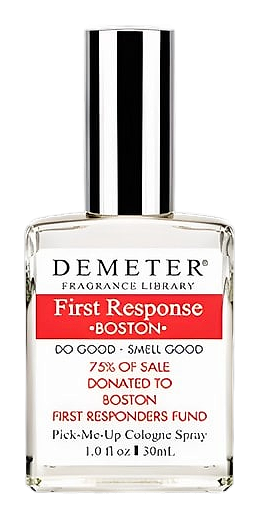
April 15, 2013. Two pressure cookers detonated near the finish line of the Boston Marathon. Three dead. Hundreds more wounded. First responders ran toward the smoke when everyone else ran away. A month later, Demeter Fragrance Library launched First Response, Boston. Every cent of proceeds went to the Boston First Responders Fund, administered through the Boston Firefighter's Credit Union. The fragrance wasn't meant to smell pretty. It was meant to smell true.
Smoke and rubber. Spices and flowers. This is the composition Demeter chose to represent the moment, not as metaphor, but as olfactory record. The smoke is white smoke, the kind that rises from wreckage. The rubber is the tires, the hoses, the protective gear. The florals aren't a softening agent. They're what gets left behind when the sirens stop. The spices add warmth, the way survivors often become their own source of it. This is a fragrance that refuses to look away.
The evolution
The opening hits like walking into a room where something just burned. Acrid. Immediate. The smoke doesn't announce itself, it arrives. Within minutes, the rubber asserts itself: petroleum, vinyl, the scent of response rather than disaster. The florals push through around the 20-minute mark. Brief. Almost shy. They don't soften the smoke so much as stand beside it. The spices warm the whole thing into something almost wearable. Then the florals fade first. The smoke settles. The rubber becomes a base note that clings to fabric for hours. On skin, it softens into a smoky warmth that surprises. The longevity holds, six to eight hours depending on where it lands. The next morning, there's a ghost of it on a jacket sleeve. Smoke and memory.
Cultural impact
First Response, Boston arrived in May 2013, roughly a month after the Boston Marathon bombing. The launch prompted immediate debate: some called it insensitive, others called it necessary. The fragrance itself is polarizing, smoke and rubber aren't comfortable notes. They don't invite. They confront. For those who wore it as intended, it became a small act of solidarity. The fragrance was discontinued but never forgotten. It now circulates among collectors who remember both its purpose and its unusual character.