



Heritage
A house, in its own words
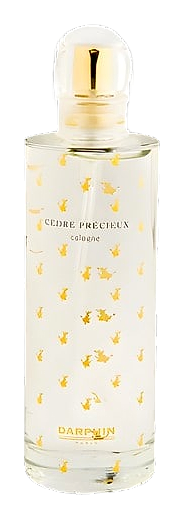
Pierre Darphin opened his Paris practice in 1958, building his reputation as a kinesitherapist before launching the brand that bears his name. Trained in morphology and movement therapy, he approached skin concerns through a lens that connected physical manipulation with plant-based formulation, a perspective that set Darphin apart from conventional cosmetics houses of the era. The company developed its signature 3-D program, a method that combined diagnosis, formulation, and specialized massage technique, which became central to how the brand presented itself within French beauty culture. Across the following decades, Darphin expanded internationally, eventually becoming part of the Estée Lauder Companies portfolio, a detail noted across multiple beauty industry sources. The fragrance dimension of the house emerged in 2003 with the launch of Accents d'Aromes Pour Elle and Accents d'Aromes Pour Lui, followed in 2008 by a trio of nature-themed eaux de toilette: Lys d'Eau, Cedre Precieux, and Baies Sauvages. These releases signaled a continuation of the botanical thread rather than a pivot toward traditional perfumery. Darphin's creative outlook begins with the body as a system in motion. Pierre Darphin believed that skin responds not only to what is applied to it, but to how it is touched, and that botanical extracts could be formulated to work alongside specific massage gestures rather than in isolation. This pairing of ingredient and technique defines the brand's point of view across both skincare and scent. Within the fragrance category, this translates into compositions built around identifiable plant notes, lily of the valley, wild berries, precious cedar, presented as sensory extensions of a botanical ritual rather than as conventional perfumery. The house tends toward quiet, nature-led olfactive territory, avoiding the heavier gourmand or oriental territory that dominates much of commercial fragrance. Fragrance, in Darphin's framing, functions as a complement to wellness, a finishing gesture within a broader care practice rather than the centerpiece.