




Heritage
A house, in its own words
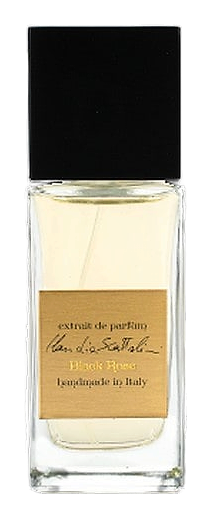
Claudia Scattolini trained at ISIPCA in Versailles, the school founded by Jean Jacques Guerlain, which became a reference point for international perfumery education. She is reported to have been the first Italian admitted to the school's EFCM program. In 2007 she founded her company Fragrance Designer in Italy, claiming the title as a distinct creative profession in the country, distinct from the perfumer role traditionally attached to large houses. Her practice grew across two directions. One is private-label and contract production for brands seeking Italian-made scents. The other is bespoke creation, individual formulas written for a single client. She also developed olfactory scenography, the use of scent as part of the identity of a physical space, an approach that has led to collaborations with cultural institutions. Among the more visible of these was her commission to create a fragrance marking the eight centuries of the University of Padova, a project that brought together her academic training, her material sensibility, and her interest in scent as a form of cultural memory. The brand's portfolio expanded publicly in 2016 with a series of personal compositions, including Rose, Vanilla, Marine, Wood & Skin, Amber, Agrums, and Wild Fig. A later release, Black Rose, arrived in 2021, signaling a return to the rose theme with a darker, more resinous treatment. Scattolini approaches fragrance as a form of authorship rather than a manufactured product. Her concept of Fragrance Design treats scent as something written for a specific client, space, or moment, with the creator working like a composer shaping notes rather than a formulator mixing from a library. This makes the medium personal: a scent can be commissioned for a wedding, a hotel lobby, a brand launch, or a private wardrobe. She has spoken publicly about preferring raw, identifiable materials over reconstructed or overly synthetic bases. Sandalwood, oud, and real jasmine are cited in her interviews as ingredients she returns to, materials with histories that anchor a composition in something recognizable even when worn unconsciously. The philosophy privileges transparency: the wearer should be able to sense what is in the bottle, and the creator should be able to defend every choice in the formula. Her work also reflects a belief that scent belongs to architecture and memory, not just to skin. Olfactory scenography extends the practice into galleries, historic buildings, and public events, treating fragrance as one more material a designer can place in a room alongside light, sound, and texture.