Heritage
A house, in its own words
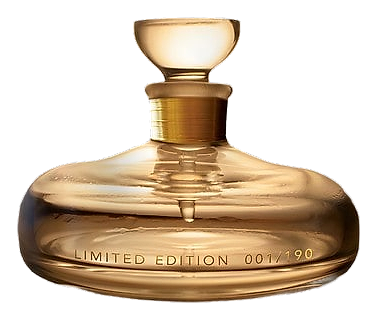
Bovet’s story begins in 1822, when Édouard Bovet established a watchmaking business that later became associated with the Bovet 1822 name. Independent historical material describes Bovet as one of the successful watchmaking houses of the nineteenth century, with its early commercial activity strongly connected to China. The Bovet brothers played a central role in building the business, and the house is particularly associated with Fleurier, where it developed a distinctive watchmaking identity. Its later revival under the Bovet 1822 banner preserved the founder’s name and the reference to the year of establishment while repositioning the company for contemporary collectors. The house’s cultural image is therefore shaped by two linked histories: the nineteenth-century development of Swiss mechanical watchmaking and the modern presentation of Bovet as an integrated manufacture. Fragrance entered this established setting as another expression of craft and refinement rather than as the original purpose of the company. The available historical record does not identify a perfumer for Bovet Limited Edition, so its authorship should not be inferred from the broader Bovet name. Likewise, claims that the fragrance house shares the full history of Bovet’s watchmaking business should be approached cautiously, since the primary sources supplied here focus heavily on watches and provide limited documentation for the perfume division. What can be stated clearly is that Bovet carries the authority and visual memory of a historic Swiss name into a niche fragrance project released in 2012. Bovet’s creative vision appears to connect the discipline of mechanical watchmaking with the atmosphere of historic perfumery. Watchmaking culture values proportion, legibility in construction, carefully controlled finishes and the pleasure of discovering small details at close range. That sensibility translates naturally into fragrance presentation through composed scents, elaborate naming and an emphasis on the object as much as the wearer’s impression. The house’s fragrance identity is selective rather than expansive, placing importance on rarity and the ceremonial character of each release. Bovet Limited Edition is presented as a special fragrance object, a suitable description for a release whose title itself suggests a numbered or finite edition, although the supplied material does not establish the exact production quantity. This approach also reflects the decorative instincts associated with Bovet’s watchmaking world, where a timepiece may function as both a technical instrument and an intimate piece of design. The philosophy should not be reduced to vague luxury language. Its clearest framework is historical continuity, controlled artistry and a desire to make fragrance feel connected to a broader culture of making. For a discovery platform, the most useful interpretation is that Bovet occupies the intersection of Swiss precision and classical perfumery, offering a fragrance experience shaped as much by provenance and presentation as by scent itself.