Heritage
A house, in its own words
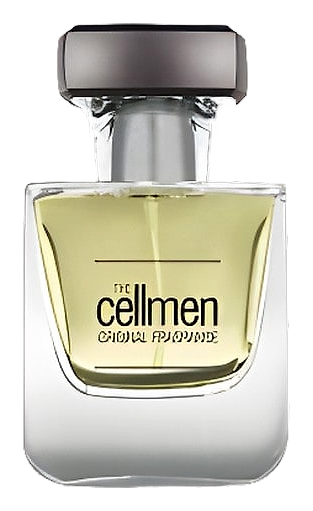
Cellcosmet’s story begins in 1987, when Roland C. Pfister introduced the brand with support from his wife, Edith, and her son Alexandre Chappuis. That same year, Pfister established Cellap Laboratoire, the organization from which Cellcosmet emerged. The company connects its origins to the development of cellular cosmetics around Lake Geneva, beginning with Professor Paul Niehans in the 1930s. Niehans’s work in cellular therapy became an important reference point for the emerging field of cellular skincare, though the sources supplied here do not establish that Cellcosmet was founded by him or that it inherited his laboratory. Instead, Cellcosmet’s own history starts with Pfister and his family. Pfister’s interest in skincare and cellular science led to a company built around research-led cosmetics. Over time, Cellcosmet expanded its formulas for different skin types and concerns while maintaining its identity as a Swiss skincare specialist. The brand’s most clearly documented perfume chapter is Cellmen, released in 2013. That launch placed Cellcosmet within the fragrance market and gave the house a distinctly masculine scent line, even though skincare remains its central field. The available material does not identify Cellmen’s perfumer, so its creative authorship cannot be attributed beyond the brand. Nor do the sources provide detailed evidence for later launches, acquisitions, or international expansion milestones. The defensible historical arc is therefore one of a 1987 foundation, a close connection to the Swiss cellular-cosmetics movement, growth as a specialist skincare house, and the 2013 introduction of Cellmen. Cellcosmet’s philosophy centers on translating ideas from cellular biology into skincare language. The brand takes its reference point from Professor Paul Niehans, who is credited in the supplied material with introducing cellular cosmetics near Lake Geneva in the 1930s. Rather than presenting this history through fashion or lifestyle imagery, Cellcosmet frames its work through research, skin knowledge, and product efficacy. Its approach is attentive to the skin as a living tissue, with formulas designed around the idea of supporting its natural functions. The company describes a balance between scientific expertise and nature, while its formulations are said to be tailored for different skin types. This gives the brand a practical rather than ornamental identity. Cellcosmet also speaks through the authority of specialists and scientists, treating skincare consultation and formulation as connected disciplines. That outlook is reinforced by its emphasis on quality and safety, and by a commitment to products manufactured in Switzerland. In fragrance, the clearest expression of this philosophy is Cellmen, a men’s scent introduced in 2013. Because the available sources name no perfumer and give no formal statement of artistic intent for Cellmen, it would be inappropriate to assign notes, inspirations, or motivations to its composition. Even so, the fragrance fits the house’s broader preference for structured, purposeful design. The brand’s creative stance can therefore be defined by four connected ideas: respect for skin biology, reliance on laboratory knowledge, careful formulation, and a Swiss identity expressed through disciplined presentation rather than excess.