    Home/Brands/Louis Widmer

    Louis Widmer

    Louis Widmer is a Swiss brand that grew from a family pharmacy into a respected name in skin‑care and fragrance. Founded in 1960, the company blends clinical precision with a quiet sense of scent, offering products that feel as gentle as a Swiss alpine breeze. In 2017 the house introduced the L’Eau de Peau trio – Eau Fraîche, Eau Douceur and Parfum Elixir – each designed to sit lightly on the skin while delivering a subtle aromatic signature. The line reflects the brand’s long‑standing belief that fragrance should complement, not overwhelm, everyday care.

    SwitzerlandEst. 1960
    1
    Fragrances
    4.7
    Avg rating
    Shop the collection
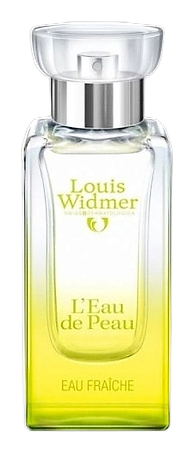
    SignatureL'Eau de Peau Eau Fraîche
    L'Eau de Peau Eau Fraîche
    Community
    4.7
    Average rating
    across 1 fragrances
    Collection
    1
    Fragrances and counting
    Heritage
    1960
    Founded in Switzerland

    Most loved

    Bestsellers from Louis Widmer

    L'Eau de Peau Eau Fraîche by Louis Widmer
    Louis Widmer
    L'Eau de Peau Eau Fraîche
    4.7
    Compare prices
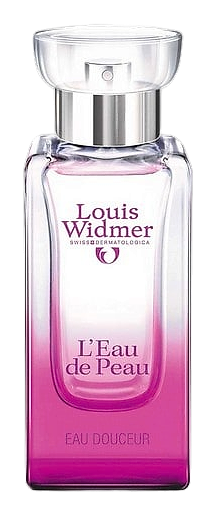
    Coming soonL'Eau de Peau Eau Douceur by Louis Widmer
    Louis Widmer
    L'Eau de Peau Eau Douceur
    4.3
    Coming soon
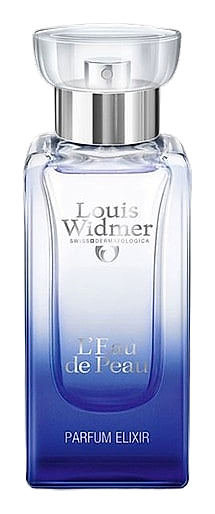
    Coming soonL'Eau de Peau Parfum Elixir by Louis Widmer
    Louis Widmer
    L'Eau de Peau Parfum Elixir
    4.1
    Coming soon

    Fresh in

    New from the house

    L'Eau de Peau Eau Fraîche by Louis Widmer
    Louis Widmer
    L'Eau de Peau Eau Fraîche
    4.7
    Compare prices
    Coming soonL'Eau de Peau Eau Douceur by Louis Widmer
    Louis Widmer
    L'Eau de Peau Eau Douceur
    4.3
    Coming soon
    Coming soonL'Eau de Peau Parfum Elixir by Louis Widmer
    Louis Widmer
    L'Eau de Peau Parfum Elixir
    4.1
    Coming soon

    Heritage

    A house, in its own words

    The story begins in Zurich, where Louis‑Edouard Widmer opened a modest pharmacy in 1960. His son, Louis‑Max Widmer, joined the venture a few years later, expanding the range beyond traditional remedies to include cosmetics that respected the skin’s natural balance. By the early 1970s the brand had secured placement in Swiss drugstores, building a reputation for reliable, dermatologist‑tested formulas. The 1980s saw the establishment of an in‑house research laboratory that partnered with the University of Zurich, allowing the company to test new actives under strict pharmaceutical standards. In 1995 Louis Widmer launched its first scented product, a light eau de toilette intended for daily wear, marking a modest entry into the fragrance market. The 2000s brought a series of skin‑care innovations, such as a vitamin‑C serum formulated with Alpine rosehip oil, and a line of moisturisers that used Swiss‑grown oat extract for barrier support. 2017 proved pivotal when the brand released the L’Eau de Peau collection, three fragrances that each paired a distinct olfactory note with a matching skin‑care benefit – a concept that echoed the company’s heritage of merging scent and science. Sustainability entered the agenda in 2020, when Louis Widmer pledged to source 80 % of its botanical ingredients from certified organic farms and to transition all packaging to recyclable materials by 2025. In 2022 the brand announced a collaboration with a Swiss biotech start‑up to develop a peptide derived from Alpine edelweiss, aimed at improving skin elasticity. Throughout its six‑decade journey, Louis Widmer has remained anchored in Swiss precision, modest growth, and a quiet confidence that lets the products speak for themselves. Louis Widmer approaches beauty as a dialogue between skin and scent, rather than a competition. The brand’s guiding principle is that efficacy and subtlety can coexist; every formula is first tested for dermatological safety before a fragrance note is considered. This dual focus stems from the founders’ pharmacy background, where the priority was always to protect the skin’s barrier. The company values transparency, publishing ingredient lists in full and explaining the role of each component. Sustainability is treated as a long‑term responsibility, not a marketing tagline – the brand invests in organic Alpine herb farms and supports local beekeepers to ensure a steady supply of pure honey and propolis. Inclusivity also shapes the philosophy; products are formulated to be suitable for a wide range of skin types, and the fragrance line is deliberately understated so it can be worn by anyone, regardless of gender. Creativity is encouraged within the limits of scientific rigor, leading to innovations such as a moisturizer that releases a faint citrus aroma when applied, reinforcing the idea that scent can enhance, not distract from, skin‑care rituals.

    1960
    Louis‑Edouard Widmer and his son Louis‑Max Widmer open a pharmacy in Zurich, laying the foundation for the brand.
    1973
    First line of dermatologically tested moisturisers launched, gaining distribution in Swiss drugstores.
    1995
    Introduction of the brand’s inaugural scented product, a light eau de toilette designed for everyday wear.
    2017
    Release of the L’Eau de Peau trio – Eau Fraîche, Eau Douceur and Parfum Elixir – each paired with a skin‑care benefit.
    2020
    Sustainability pledge announced: 80 % of botanical ingredients to be sourced from certified organic farms and all packaging to become recyclable by 2025.
    2022
    Collaboration with a Swiss biotech start‑up begins to develop an Edelweiss‑derived peptide for anti‑aging formulations.

    The noses

    Perfumers behind the house

    Did you know?

    Interesting facts

    01

    The original Louis Widmer pharmacy was located on Bahnhofstrasse, one of Zurich’s most prestigious shopping avenues.

    02

    L’Eau de Peau Eau Fraîche uses water drawn from an Alpine spring that is filtered naturally through limestone before bottling.

    03

    The brand’s research lab was one of the first in Switzerland to receive ISO 22716 certification for cosmetic Good Manufacturing Practice.

    04

    Louis Widmer’s fragrance bottles are made from 100 % recycled glass, a material that the company sources from local Swiss bottle manufacturers.