The Story
Why it exists.
The beginning
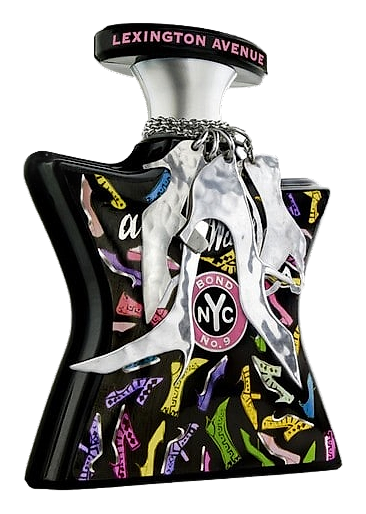
The Andy Warhol collection by Bond No. 9 began as an olfactory tribute to the artist who made pop art inseparable from New York itself. The third chapter takes its name from 242 Lexington Avenue, the Murray Hill address where Warhol kept his first apartment, a one-room studio near Murray Hill on Manhattan. The bottle arrives decorated with a sterling silver necklace of four shoe-shaped pendants, drawn from Warhol's early sketches. It opens with a crisp anise and fennel accord that evokes the sharp, aromatic air of city mornings, softened quickly by the warm, edible comfort of roasted almond. The drydown settles into a skin-close warmth of sandalwood and patchouli, intimate and lingering. It is, in every sense, a fragrance that remembers where the artist started.
What makes this composition unusual is the pairing of fennel with crème brûlée, anise and caramel sharing the same breath. Most fragrances keep gourmand and aromatic apart; this one lets them argue. The blue cypress brings a conifer coolness that prevents the edible heart from becoming syrupy. Pink peony adds a powdery floral lift that sits just above the skin, never quite announcing itself. The result is a chypre-floral structure that wears its gourmand warmth like a quiet interior rather than a statement.
The evolution
The opening hits with a sharp anise bite, fennel, star anise if your skin pulls it, backed by the green resinous quality of blue cypress. The roasted almond arrives within minutes, softening the edges. Ten minutes in, the crème brûlée takes over: caramelized sugar, butter, the crack of a torched surface. The pink peony emerges quietly, threading through the sweetness with a powdery floral note that prevents it from becoming cloying. By the second hour, the sandalwood and patchouli base settles in, warm, woody, slightly dry. The drydown is intimate and close, skin-warm rather than room-filling. Longevity is respectable, and the sillage stays moderate, inviting those nearby to lean in without announcing itself to the whole room.
Cultural impact
The Andy Warhol Lexington Avenue was part of a licensed collection celebrating the artist whose early New York years shaped American pop culture. When the Warhol Foundation license ended in 2013, the fragrance was quietly renamed Lexington Avenue, keeping its original composition while the name and bottle were altered. The shoe motif bottle, designed by Robert Lee Morris, remains one of the brand's most distinctive vessels, a striking piece that stands out on any vanity.