
The Story
Why it exists.
The beginning
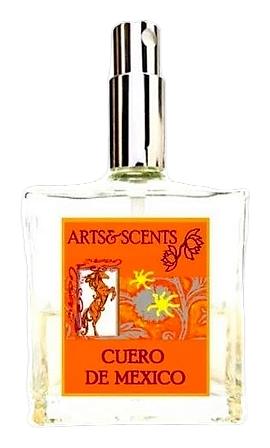
Manuela Pfannes-Völkel conceived Cuero de Mexico in 2010 as a scented tribute to Mexican leather craftsmanship. The German perfumer, working through her boutique house Arts&Scents, wanted to bottle the sensory memory of traditional cuero, the handworked hide shaped by sun and labor. Rather than starting with the leather itself, she began with the landscape surrounding its creation, leading with neroli as a nod to the citrus groves that dot the region. The choice of tuberose in the heart mirrors the tropical intensity of Mexican flora, while myrrh speaks to the resinous woods used in traditional curing. This is a fragrance about process as much as material.
Pfannes-Völkel has spoken about treating each Arts&Scents fragrance as a narrative capsule, and Cuero de Mexico exemplifies this philosophy. The note structure pairs opposites: neroli against leather, tuberose against myrrh. Each pairing creates tension that resolves in the drydown. The perfumer's decision to anchor the composition in leather rather than treat it as a background note reflects her belief that the material should carry meaning. The myrrh serves a dual purpose, bridging the lush heart to the austere base while introducing an olfactory dimension often associated with sacred ritual in Mexican tradition.
The evolution
The opening of Cuero de Mexico follows a northeast trajectory, beginning with the sharp clarity of neroli that dissipates quickly but establishes a luminous foundation. As this fades, tuberose expands to claim space, its creamy yet slightly green character softening the transition. The floral heart does not stay still; it breathes and shifts, with supporting notes adding nuance that rewards patience. By the third hour, myrrh arrives like a low-frequency hum, grounding the sweetness with balsamic weight. Leather arrives last, not as an accent but as a conclusion, dry and warm and impossible to ignore. The progression moves from garden to atelier, from flower to hide.
Cultural impact
Since its 2010 debut, Cuero de Mexico has quietly become a reference point for collectors seeking a refined leather scent that balances brightness with depth. Its citrus‑floral twist sets it apart from typical smoky leathers, earning it mentions in niche forums as the go‑to for an artistic take on Mexican leather, often recommended for cooler months and sophisticated evenings.