The Story
Why it exists.
The beginning
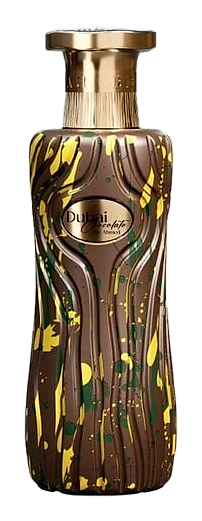
Dubai Chocolate takes its name from a city that has long understood the language of excess. Not excess as indulgence, excess as ambition. Where other cities serve chocolate in neat squares, Dubai wraps it in gold leaf and pistachio dust and calls it an experience worth traveling for. Ahmed Al Maghribi built their identity on translating exactly this kind of sensory aspiration into fragrance. The house has spent two decades bridging Arabian perfumery traditions with the compositions that global audiences actually reach for. Dubai Chocolate is that bridge, crossed. A confectionery concept with roots in the GCC, knafeh and pistachio are not borrowed from European pastry culture. They belong here, in the same kitchens and sweet shops that line every block from Ajman to Dubai. The fragrance takes that familiarity and scales it up, into something wearable, lasting, and unmistakably named after a city that has always known how to make an entrance.
What makes the knafeh and pistachio top interesting is that it leans savory-adjacent before it leans sweet. Traditional knafeh carries orange blossom water and cheese threads that can read almost salty on skin, here, that edge gets captured as warmth and texture rather than salt. Combined with roasted pistachio, it creates an opening that smells like a specific thing: the moment before the sugar takes over. Most gourmand fragrances open with sweetness and stay there. Dubai Chocolate opens with the idea of sweetness, the anticipation, before the chocolate heart delivers the thing itself. That structural inversion is what separates it from the average cocoa-and-vanilla pack.
The evolution
The opening minute belongs entirely to knafeh and pistachio. Sweet cheese warmth, green nuttiness, a faint honeyed quality that reads moreish rather than heavy. It lasts longer than most top notes, pushing toward thirty minutes before the chocolate arrives to take over. That handoff is the fragrance's most interesting moment. The chocolate doesn't crash in. It rises, slow and velvety, underneath the knafeh until the original fades and suddenly you're in a different place entirely. Cream joins chocolate and together they create something that smells like actual melted cocoa butter on warm skin. Not synthetic, not flat. The real density of something you'd eat with a spoon. The drydown strips it back to its most intimate state. Caramel and vanilla blend into a soft, powdery warmth that Musk keeps close to the skin for hours. What started as a statement becomes a secret. The next morning, the vanilla is still there, faint, sweet, like a memory of the night before.
Cultural impact
Dessert-themed fragrances have saturated the market for years, most trade in safe, familiar accords that appeal broadly and offend nobody. Dubai Chocolate sits differently. By anchoring the opening to knafeh and pistachio rather than defaulting to hazelnut or caramel, it stakes a claim: this is not European pastry. It is Gulf confectionery, worn as a statement. The fragrance speaks to a growing audience that wants their gourmand scent to mean something specific, a place, a memory, a luxury that belongs to them rather than to a trend cycle. Ahmed Al Maghribi's position as a regional house with international reach gives the release credibility that a Western brand attempting the same concept would lack.