
The Story
Why it exists.
The beginning
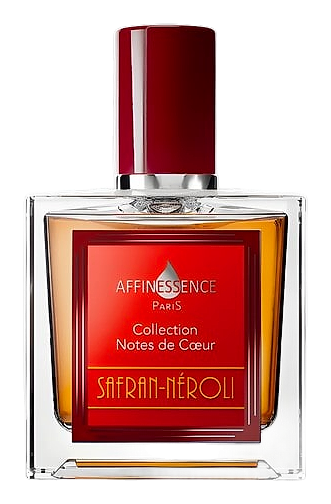
The name says everything. Safran-Neroli is built on a deliberate tension, saffron's metallic, slightly medicinal brightness against neroli's warm, enveloping floral character. Margherita Carini wanted these two materials in conversation, not harmony. The davana bridges them with its honeyed-green quality, and black tea grounds the whole thing in something quietly astringent. It's not a safe composition. It's one that asks you to stay with it.
What makes this work is the davana and the black tea. Davana is not a common material, it brings a sweet, almost anise-like quality that keeps the florals from becoming precious. Black tea, specifically the dark, astringent kind, provides the structural element that stops the composition from becoming syrupy. The ylang-ylang does the heavy lifting on warmth, but it's the black tea's bitterness that keeps everything honest. That's the real craft here: using warmth without sacrificing edge.
The evolution
The opening is all saffron and davana together, metallic brightness and honeyed-green sweetness arriving at once. The composition feels almost sharp at first, then gradually softens as the neroli arrives and the ylang-ylang follows. The black tea becomes more apparent in the mid-stage, lending a slight bitterness that keeps the florals grounded. As the fragrance develops further, the spice recedes and the white florals take over, doing the work that remains. On the skin, it's intimate, close enough that someone standing next to you might catch it. The blend moves from that initial brightness through a nuanced middle phase into something quieter and more restrained, each stage revealing different facets of the composition.
Cultural impact
The saffron-neroli pairing is not new, but Safran-Neroli approaches it differently. Rather than using saffron as a seasoning, it functions as a starting point, something that opens the composition and then yields to the florals. The result is a fragrance that reads as floral-forward despite its spice credentials. This approach to ingredient hierarchy creates a scent that subverts expectations about what saffron can do in a formula, positioning it as a vehicle for the florals rather than a dominant force. The composition demonstrates how familiar materials can be recontextualized to surprising effect.