Fabien Baron
Born in Antony, France in 1959, Fabien Baron trained at Arts Appliqués in Paris before cutting his teeth in the art department at L'Équipe, the storied French sports daily. That early immersion in visual journalism sharpened an instinct for clarity and compression that would define everything that followed. He moved to New York in the early 1980s and, within a decade, had built a reputation as one of the most influential art directors of his generation, founding Baron & Baron and reshaping the visual language of magazines including Interview and Harper's Bazaar. His entry into beauty came in 1991, when Issey Miyake phoned with a commission that changed the trajectory of fragrance design. Baron created the bottle for L'Eau d'Issey, a sculptural cone of frosted glass that married Japanese minimalism with European precision and became an instant icon. Over the past three decades he has designed roughly forty fragrance bottles and campaigns, collaborating with houses that span the prestige spectrum, including ongoing work with Maison Margiela, where he directed the Scentsorium experience. A recipient of ADC Hall of Fame honors, Baron remains active across film, photography, furniture, and fragrance, a polymath whose visual philosophy reshapes every medium it touches.
The hits
Notable creations
The signature
How Fabien composes
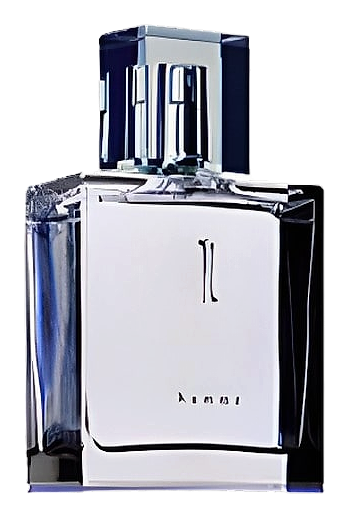
In fragrance design, Baron's signature is reductive geometry and material honesty. He favors bottles with a single dominant form, a cone, a cube, a disc, finished with unexpected tactile treatments that invite the hand as much as the eye. His visual world leans cool, architectural, and quietly dramatic, with typography pared down to essentials and photography that reads more like cinema than commerce. He prefers compositions where the packaging creates a frame for the scent rather than competing with it, letting ingredients speak through negative space and silence. The recurring mood across his work is sculptural clarity married to emotional suggestion.
Philosophy
What drives Fabien
Baron approaches fragrance the way he approaches a magazine cover: by stripping away everything that does not belong. He has spoken repeatedly about the importance of a single, irreducible idea, a bottle that says one thing so clearly you remember it a decade later. His collaborations with perfumers begin long before the juice is poured, often at the conceptual stage, where he treats scent as part of an integrated sensory object rather than a product in a container. He gravitates toward tension between opposites: matte against gloss, transparency against weight, restraint against presence. This is not minimalism for its own sake but a rigorous hunt for the gesture that earns attention without demanding it.
The houses