Desmond Knox Leet
Desmond Knox-Leet arrived in Paris as an English painter with an unusual past: he had spent the war years at Bletchley Park, Britain's codebreaking headquarters, before abandoning London for the Left Bank's creative ferment. In 1961, he partnered with set designer Yves Coueslant and textile designer Christiane Gautrot to open a small boutique on Boulevard Saint-Germain. The shop sold their hand-designed fabrics, wallpapers, and an eclectic selection of imported British objects. By 1964, Knox-Leet began curating scented items from his homeland, importing sachets and pot-pourris that reflected his English sensibility. The trio had no formal perfumery training, but they approached fragrance as artists approaching a canvas. Knox-Leet drew his way through the world, capturing observations in sketches that later informed the first Diptyque perfumes. His background as a painter meant he understood composition, contrast, and the interplay of light and shadow. He translated those visual principles into scent, building fragrances that worked like layered canvases. As one of three founders who each brought different creative instincts to the project, Knox-Leet helped establish Diptyque's distinctive voice: intellectual, textured, and rooted in artistic friendship rather than commercial calculation.
The hits
Notable creations


The signature
How Desmond composes
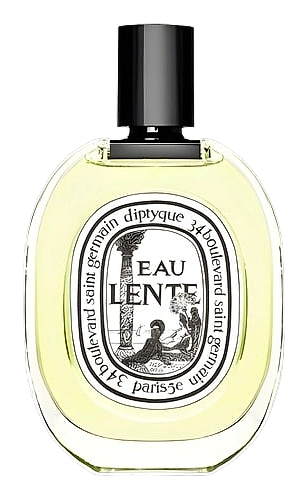
The fragrances bearing Knox-Leet's hand show a preference for warm, resinous materials and a particular sensitivity to cinnamic notes. His compositions often feature woody and balsamic elements that develop slowly on the skin, revealing different facets over time. Unlike perfumers trained in classical technique, he brought an intuitive sense of arrangement, layering notes as he might layer color in a painting. Eau Lente remains the clearest example of his approach: a study in cinnamon's dry warmth, grounded by wood and set against a balsamic backdrop that feels both intimate and slightly mysterious. His work avoids obvious brightness in favor of deeper, more textured effects. The result feels lived-in rather than constructed, like something discovered rather than manufactured.
Philosophy
What drives Desmond
Knox-Leet believed in the close relationship between seeing and smelling. His habit of drawing everything he observed meant he approached fragrance with a visual artist's eye for structure and balance. He resisted the idea of perfumery as mere formula, insisting instead on personal interpretation. For him, each scent should feel like an encounter with a specific memory or place rather than a catalog of ingredients. This perspective shaped Diptyque's early identity, pushing the brand toward narratives that felt intimate and handcrafted. He understood fragrance as an extension of daily life, something worn in rooms where one lived and worked, not just sprayed on special occasions. His English upbringing gave him an attachment to natural materials and subtle contrasts, an aesthetic that would distinguish his work from the more theatrical French perfumery of his era.
The houses
Maisons Desmond composes for
In the same league