Diptyque
Diptyque began as a Left Bank boutique in 1961, founded by three friends united by their passion for art, travel, and design. Desmond Knox-Leet, a painter, brought perfumery training that would shape the house's distinctive voice. Together with Yves Coueslant and Christiane Montadre Gautrot, an interior designer, they created a Maison that defied convention. Rather than emerging from a fragrance house or laboratory, Diptyque grew from artistic fellowship, opening its first store at 34 Boulevard Saint-Germain and initially dealing in textiles, wallpaper, and home objects. The decision to create perfumes came almost accidentally, born from Knox-Leet's discovery that his perfumery formulas could translate the scent memories from his travels into wearable form. This background gave Diptyque something rare in perfumery: an outsider's perspective unshackled from tradition. The founders approached fragrance as artists approaching a canvas, treating each scent as a portrait of a place, a memory, or an emotion. Today, Diptyque remains under the LVMH umbrella, but its creative DNA still traces back to those three friends who believed that the most compelling fragrances begin as stories worth telling.
The hits
Notable creations
The signature
How Diptyque composes
Diptyque's signature style favors restraint, complexity, and an almost meditative quality. The house gravitates toward natural materials and clean compositions that reveal their structure slowly, refusing to shout. Olfactory storytelling dominates their approach, with woody notes, particularly sandalwood and cypress, appearing frequently as anchors. Green accords, fresh herbs, and resinous elements also recur throughout their catalog, reflecting the founders' preoccupation with nature and botanicals. The house tends toward a less-is-more aesthetic, building subtle depth rather than maximalist sillage. Texture matters enormously to Diptyque's creators; they seek fragrances that feel almost tangible, that exist in space rather than simply emanating from a bottle. Their style resists easy categorization, spanning fresh citruses, intimate musks, and meditative woods without ever settling into a single house signature.
Philosophy
What drives Diptyque
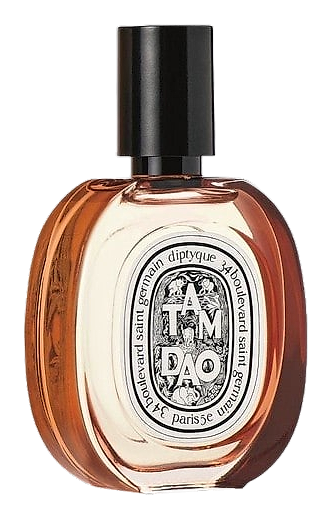
Diptyque treats each fragrance as a chapter in an ongoing artistic dialogue. The house rejects the idea of perfume as mere product, instead approaching scent creation with the sensibility of a painter mixing colors or a novelist crafting scenes. Their perfumes aim to capture the essence of a moment or place rather than simply smelling pleasant. This philosophy manifests in a catalog that reads like a travel journal: Tam Dao evokes the humidity of Vietnamese forests, Philosykos distills the complete experience of a fig tree from leaf to fruit, and Do Son carries the coolness of coastal Vietnam where one founder's childhood summers unfolded. The house believes fragrance should tell stories, evoke memories, and transport the wearer somewhere specific. Diptyque's creators view their work as a form of translation, taking sensory experiences from life and rendering them in liquid form for others to experience.
The houses
Maisons Diptyque composes for
In the same league