Bree Elliott
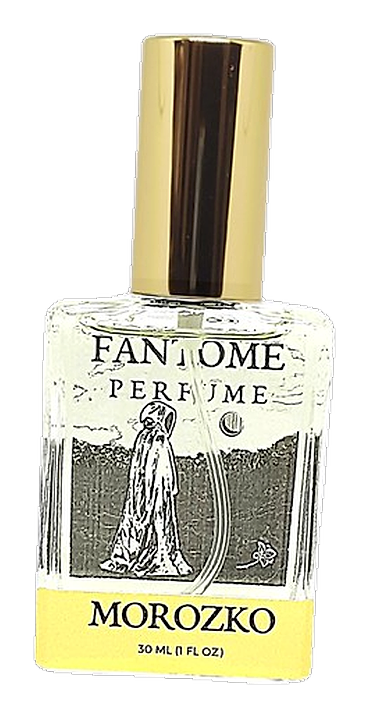
Bree Elliott's introduction to perfumery came not from a formal classroom but from a childhood garden, where she first attempted to capture scent by steeping rose petals and whatever botanicals she could gather. Those early experiments yielded limited results, but they sparked a fascination that refused to fade. At Fantôme, Bree brings an unconventional background to fragrance creation, approaching scent with the curiosity of someone who learned through doing rather than convention. Morozko, her notable creation for the house, demonstrates this hands-on sensibility: a fragrance built on real understanding of how materials interact rather than textbook formulas. She represents a growing presence of independent voices in perfumery who arrived through passion projects rather than traditional industry pathways.
The hits
Notable creations


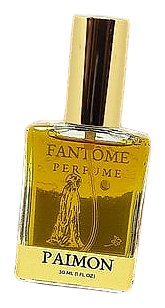

The signature
How Bree composes
Morozko hints at Bree's inclination toward cooler, atmospheric profiles. Her work appears to favor crispness over warmth, with an apparent comfort using materials that evoke winter air, evergreen needles, and the sharp clarity of cold. She seems to trust simple combinations over complex layering, allowing individual materials to read clearly rather than dissolving into a uniform whole. If there's a thread connecting her work, it might be restraint combined with precision.
Philosophy
What drives Bree
Bree's approach to fragrance carries the patience of someone who learned to wait for results. She seems drawn to materials that require attention, preferring to understand what each ingredient does before combining it with others. Her work suggests she values authenticity over trend-following, building scents from the ground up rather than chasing whatever happens to be popular. The garden-to-bottle instinct from her youth appears to remain: she tends toward materials she can almost visualize in their original form, grounding her compositions in something tangible.
The houses
Maisons Bree composes for
In the same league