Character
The Story of White Blossom
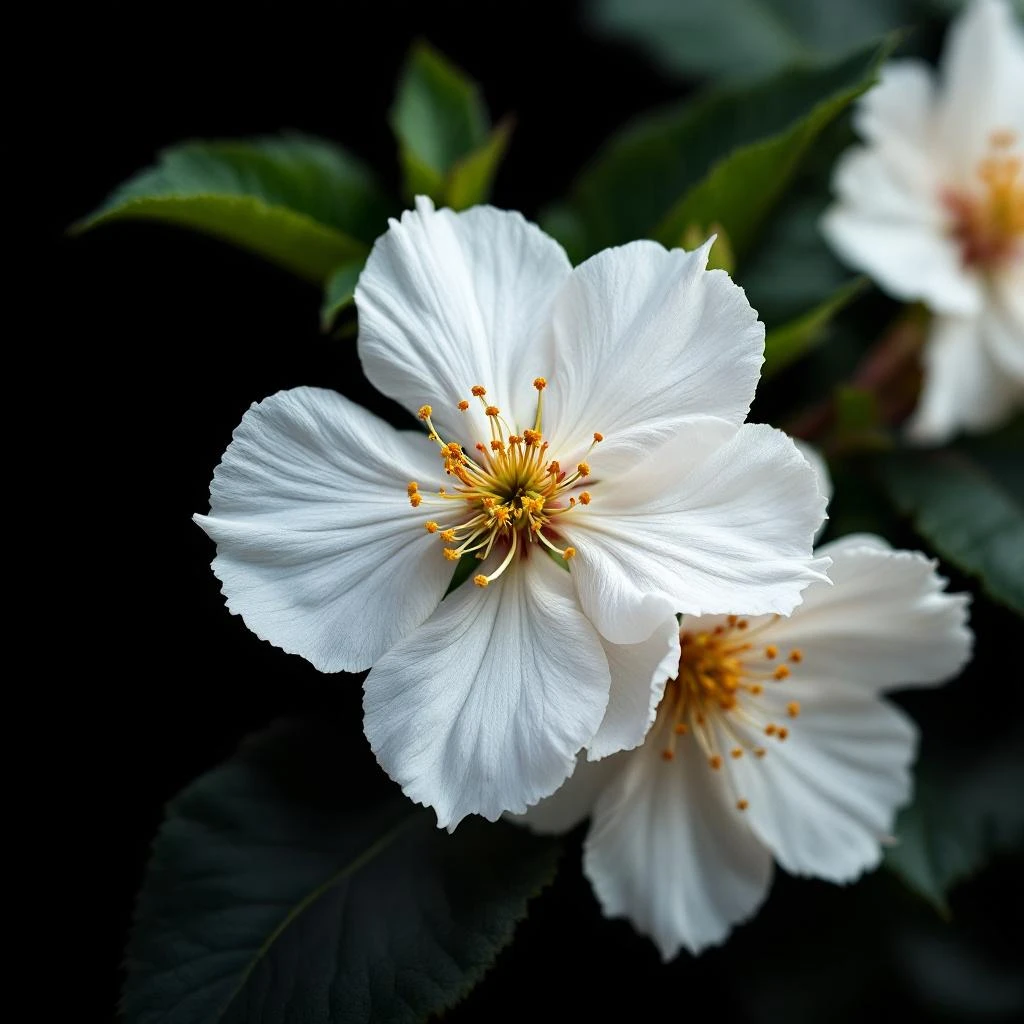
A luminous bouquet of jasmine's narcotic sweetness, tuberose's creamy opulence, and orange blossom's honeyed brightness. This accord radiates pure elegance, like walking through a garden at dawn.
Heritage
White flowers shaped perfumery since antiquity. Jasmine was cultivated in India and Persia, while orange blossom spread across the Mediterranean with Arab conquests. Grasse first grew jasmine in the sixteenth century. By the eighteenth century it was the world's finest. Chanel No. 5, created in 1921, used Grasse jasmine with rose de mai.
At a Glance
1
Feature this note
Floral
Olfactive group
Reconstructed
Lab-crafted
France
Primary source region
Ingredient Details
Solvent extraction, steam distillation, and enfleurage
Flower petals
Did You Know
"Over 8,000 jasmine flowers, picked before sunrise, produce just one gram of absolute. A kilogram of tuberose absolute requires roughly 1,200 kilograms of fresh flowers."