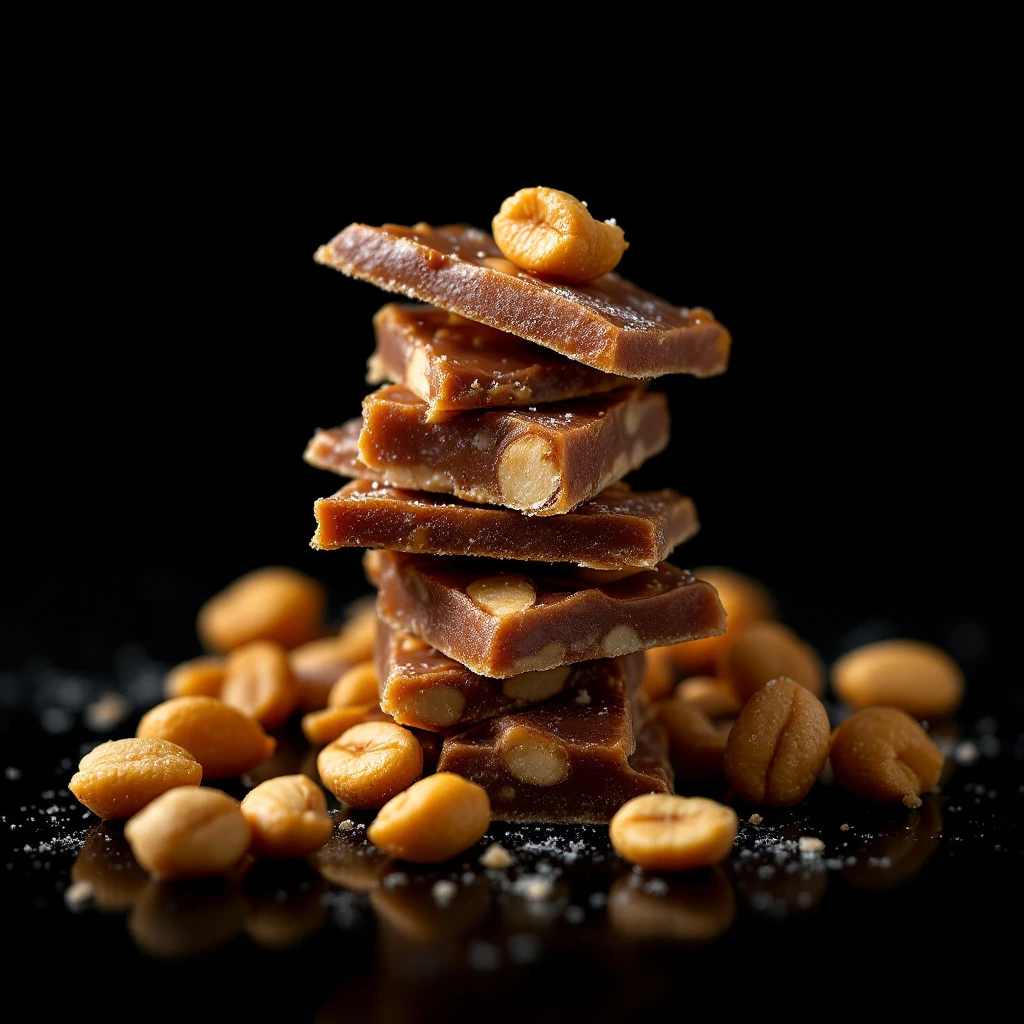
Peanut Brittle
The warm, nostalgic aroma of buttery caramelized peanuts with golden, toasty edges. A gourmand note that captures the sweet, crunchy essence of homemade confectionery.
Character
How it smells
Sweet caramelized nuttiness in a bottle
A famous legend credits the candy to a Southern woman in 1890 who accidentally added baking soda instead of cream of tartar while making taffy.
Origin
United States
Brittle confections trace their roots to ancient Mesopotamia, where sesame and honey were combined and stretched into thin sheets. Similar sweets appeared across India and medieval Europe, where nuts and caramelized sugar became standard pairings. The candy arrived in America with Irish settlers in the 1830s, but peanuts were not yet part of the formula.
Peanut brittle as Americans know it emerged after the Civil War, when southern agriculture shifted and peanuts became widely available in the region. The most repeated origin story points to 1890 and a Southern woman who accidentally substituted baking soda for cream of tartar while making taffy. The substitution created the sodium bicarbonate reaction that produces brittle is signature porous, crunchy texture.
Whether the story is completely true or partly legend, it captures the spirit of discovery that defines American candy culture.
Wears it best
Fragrances featuring Peanut Brittle
Brands
Brands known for Peanut Brittle
Good to know
Questions, answered
The essentials on Peanut Brittle in perfumery: how it smells, where it comes from, and how it behaves on skin.
What is the Peanut Brittle note in fragrance?
Peanut Brittle is a synthetic gourmand note designed to evoke the warm, sweet, buttery aroma of real peanut brittle candy. It combines roasted nuttiness with caramelized sugar, toasted edges, and creamy sweetness into a single, immediately recognizable scent impression.
How do perfumers create the Peanut Brittle note?
Perfumers build this note from multiple synthetic aroma chemicals. Roasted pyrazines provide the toasted nut character. Lactones add creamy, buttery depth. Vanillin supplies sugary sweetness. Furaneol contributes caramelized brown sugar facets. The combination mimics the complex chemistry of real candy making.
What gives Peanut Brittle its characteristic nutty aroma?
Alkyl pyrazines, particularly 2-methylpyrazine and 2,5-dimethylpyrazine, create the roasted, nutty foundation. These compounds occur naturally in roasted nuts, coffee, and cocoa. In peanut brittle, they reproduce the distinctive toasted aroma that makes the candy immediately identifiable.
How long has the Peanut Brittle note been used in perfumery?
Gourmand fragrances became prominent in the 1990s, with innovations from brands like L'Artisan Parfumeur and Thierry Mugler. Peanut brittle and similar edible notes gained traction as perfumers expanded beyond traditional natural materials into creative synthetic territory.
What fragrances pair well with Peanut Brittle?
Peanut Brittle blends naturally with other gourmand notes like vanilla, tonka bean, caramel, and hazelnut. It also works alongside amber, sandalwood, and soft musks to create warmer, more sophisticated compositions that balance sweetness with depth.
Is there a natural equivalent to Peanut Brittle note?
There is no natural botanical that produces the complete Peanut Brittle aroma. Real peanut essential oils lack the caramelized, buttery, sugary complexity of the candy. Perfumers must construct this note entirely from synthetic aroma chemicals to achieve the full gourmand effect.
What does Peanut Brittle smell like?
Peanut Brittle smells like warm candy pulled from the pan: sweet caramelized sugar upfront, roasted peanut in the heart, and a lingering buttery warmth on the drydown. The overall impression is cozy, edible, and inviting.
Where did peanut brittle originate?
Peanut brittle developed in the American South after the Civil War when peanuts became widely available. A persistent legend credits a Southern woman in 1890 who accidentally added baking soda instead of cream of tartar while making taffy, creating the characteristic porous, crunchy texture through the chemical reaction.