
The Story
Why it exists.
The beginning
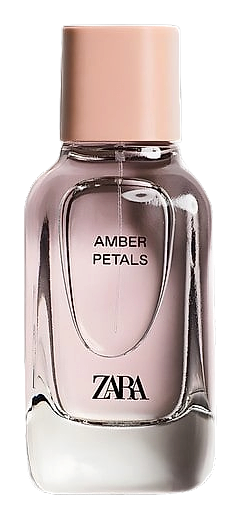
Zara launched its fragrance range in 1998 through a partnership with Spanish fragrance house Puig, a move that brought professional perfumery credentials to a fashion brand built on democratic accessibility. Since then, the brand has released collections that mirror its fashion ethos: current, minimal, designed for the moment rather than the archive. Amber Petals arrived in 2021, joining a lineup of scents named for sensory imagery rather than places or personalities. The name alone suggests warmth, softness, floral richness, promises the composition then quietly subverts.
The three-note pyramid is deliberately spare. Mandarin orange, violet, cedar. No amber, despite the name, a gap some wearers notice and others find charming. What makes the structure work is the contrast between the cool, bright opening and the powdery, almost nostalgic heart. Violet rarely leads a Zara fragrance, and when it does, the result sits differently on skin than the brand's more conventionally floral releases. The cedar base keeps everything grounded without heaviness, a quiet foundation rather than a bold statement.
The evolution
The mandarin opens clean and tart, just the right side of sharp. No ambiguity there. Then, within thirty minutes, the violet arrives, powdery, slightly sweet, softened like a pressed flower rather than a fresh bloom. The citrus doesn't disappear. It fades. The violet becomes the conversation. Cedar enters quietly around the second hour, anchoring the composition without taking over. Moderate sillage means this stays close, intimate in the best sense, noticed only by people leaning in. The drydown holds for six to eight hours on most skin types, settling into something that smells like warm skin and cedar wood. By the end, it's barely there. But for those hours, it was yours entirely.
Cultural impact
Zara operates over 3,000 stores in 95 countries, and their fragrances occupy a unique retail space: no dedicated perfume counters, no pushy sales staff, no intimidating atmosphere. You discover scents while shopping for clothes, between the racks of statement jackets and minimalist basics. This placement democratizes fragrance. No longer must you visit a specialty boutique to smell anything beyond mass-market department store fare. Amber Petals fits squarely in this democratization project. It offers a warm, approachable citrus profile at a price point that lets most people experiment freely. The fragrance does not demand commitment; it invites curiosity.