
The Story
Why it exists.
The beginning
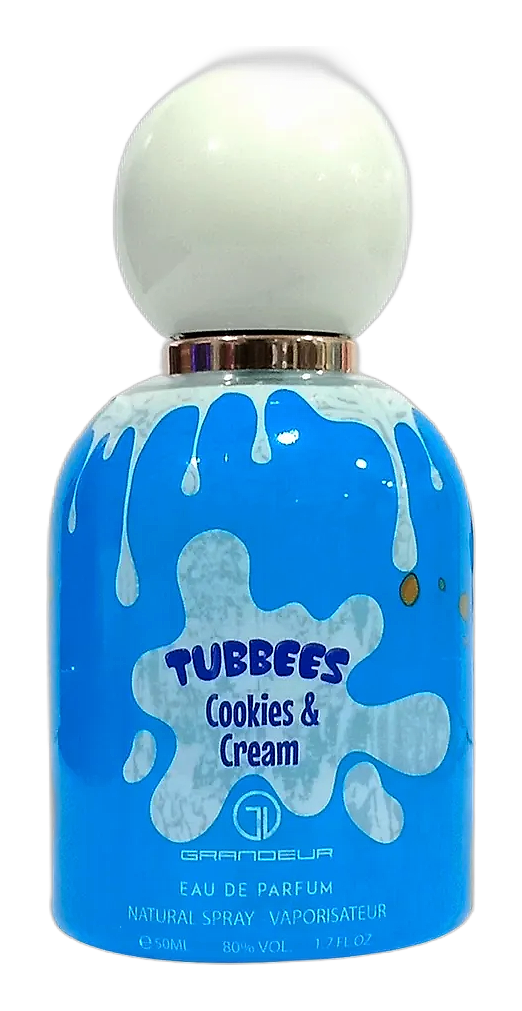
Cookies & Cream starts with the name. It's one of those flavor combinations that transcends its original context, born as a 1980s ice cream variant, it became shorthand for anything playful, striped, and instantly recognizable. Tubbees built their version around that same idea: an edible, no-ambiguity sweetness that anyone can picture. The brief was probably simple, translate the treat, not improve on it, but the execution is tighter than the concept suggests. Butter and sugar open like a bakery warming up. No tricks. Just the smell of something being made.
What makes Cookies & Cream work isn't complexity, it's restraint. Milk chocolate as a heart note could easily tip into dessert territory too far, but here it's cool and creamy, closer to chocolate milk than a dark bar. The vanilla-white musk base does something interesting: it keeps the whole thing from going powdery in that way many sweet fragrances do. Instead of settling into baby powder, it stays clean. Skin-adjacent. Close. The lactonic accord, that milky, slightly animalic creaminess, is what gives it personality beyond a simple note list.
The evolution
Butter arrives first, golden and warm. Sugar follows in crystalline waves, not sharp, just present. The handoff to milk chocolate takes about fifteen minutes, and it changes the texture entirely. What was bright becomes soft. The chocolate doesn't dominate; it cushions. Vanilla weaves in around the hour mark, threading sweetness through the cream. White musk is the quiet closer, adding a clean finish that lingers close to skin. On fabric, the butter note holds longest, you'll find it in a shirt collar the next morning. On skin, expect four to six hours of comfortable sweetness before it fades to a soft, skin-musk memory.
Cultural impact
Cookies & Cream reflects a broader cultural shift toward playful, accessible fragrance in the indie perfume space. As gourmand scents have grown from niche interest to mainstream preference, Tubbees' approach of translating everyday dessert aromas into wearable compositions speaks to a generation that treats fragrance as self-expression rather than status signaling. The brand's no-frills philosophy, avoiding perfumer attribution and complex marketing narratives, mirrors the transparency movement in other consumer goods. Dessert-themed fragrances have moved from novelty to normalization, and Cookies & Cream sits squarely in that evolution, a scent that doesn't ask you to appreciate perfumery as art, just to enjoy smelling like a treat.