
The Story
Why it exists.
The beginning
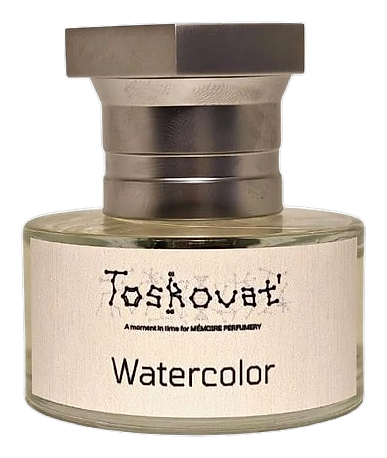
The name came first. Watercolor, pigment suspended in water, bleeding into fabric until you can't tell where one color ends and another begins. David-Lev Jipa-Slivinschi built this fragrance around that quality of diffusion. Not contrast. Not structure. Soft edges and overlapping planes of color. He was thinking about a specific afternoon light, the kind that turns everything translucent. Then he worked backward to the materials that could translate it. Toskovat' operates without a brief. Each fragrance starts with a feeling or image, not an ingredient list. Watercolor emerged from the idea of summer light falling through a window onto white sheets, everything slightly overexposed, slightly unreal. The perfumer has described his process as building emotional memories rather than accords, and Watercolor follows that logic precisely. It doesn't announce itself. It settles into a space and stays.
The note structure supports that diffusion. Where most fragrances build upward from a foundation, base, heart, top, Watercolor starts wide and stays wide. Mimosa and peach skin give the opening its watercolor softness: neither sharp nor heavy, just present. The green notes, grass, sage, hay, keep the sweetness from ever feeling cloying. They're the white space in the composition. The jams complicate things in the best way. Rose jam and blueberry jam sit somewhere between floral and fruity, between natural and processed. They give the fragrance its warmth without tipping it into dessert territory. It's sweetness as atmosphere, not sweetness as statement.
The evolution
The opening arrives quickly, fig and peach skin spreading across the skin like pigment dropped into water. There's an immediate green freshness from the grass and daisy that keeps the sweetness from feeling heavy. The first twenty minutes feel like morning light through a window: bright but diffuse. Over the next few hours, the floral and jam notes take over. Mimosa and rose jam blend with the blueberry until you can't separate them. The honey appears quietly, adding warmth without weight. This is the heart of the fragrance, the part where it becomes something you associate with a place rather than a perfume. On most skin types, this phase lasts four to six hours. The drydown is where Watercolor earns its name. As the florals fade, the dry woods and hay emerge like the paper showing through a painted canvas. Iris and hazelnut add a faint powderiness, a soft texture. Narcissus and sage linger at the edges. What remains after eight to ten hours is skin-warm and intimate, close enough to notice, too quiet to announce. The watercolor has dried. The image remains.
Cultural impact
Watercolor joins a Toskovat' collection known for provocative titles and emotional directness. The brand operates from a conviction that fragrance should function as memory made tangible, and Watercolor exemplifies that approach: a scent that doesn't describe a moment so much as it becomes one. Limited to 75 bottles, it occupies the quieter end of the Toskovat' spectrum, less confrontational than some siblings, more atmospheric than most. For those who have encountered the brand through its louder compositions, Watercolor reveals a different dimension: tenderness as provocation.