
The Story
Why it exists.
The beginning
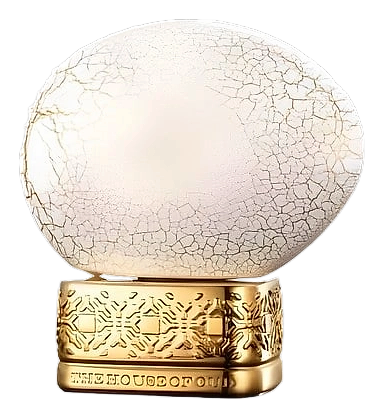
The House of Oud was born from a transcontinental friendship, Italian perfumer Andrea Casotti and Indonesian oud specialist Mohammed Abu Nashi, united by agarwood's depth. Breath Of The Infinite arrived as part of the Desert Days collection, named for that tremulous moment when our world first came to be. The idea: capture the smell of something vast and ancient, then distill it into something intimate. Not a loud statement. A breath. The title alone carries weight, the infinite made wearable, made personal.
What makes Breath Of The Infinite unusual is how the house treats its signature material. Oud rarely plays a supporting role, but here it surfaces only near the end, a faint resinous warmth beneath cashmeran and musk. The real story is the peach. Not a bright, fruity peach, but something lactonic, almost creamy, holding up the florals and giving them weight they wouldn't otherwise have. Freesia adds that powdery lift; peony brings velvet. It's a composition that trusts softness as a form of strength.
The evolution
The opening arrives like a held breath. Freesia and peony lift softly, neither bright nor aggressive, just clean, powdery air. Then the peach asserts itself. It doesn't rush. The transition takes fifteen minutes, but when it lands, the whole structure shifts. Warmth replaces abstraction. The heart isn't loud, but it commands attention within its register. By hour three, the drydown takes over. Musk, ambroxan, and cashmeran layer into something close, something skin-adjacent rather than perfume-adjacent. The oud doesn't arrive all at once. It surfaces near the end, resinous, quiet, grounding the softness. Eight hours later, what remains is the memory of warmth against skin.
Cultural impact
Breath Of The Infinite occupies an unusual space: genuinely unisex without leaning masculine or feminine. It's part of the Desert Days collection, a series built around oud's quieter applications. The fragrance draws wearers who value intimacy over projection. Those who connect with it tend to return.