Heritage
A house, in its own words
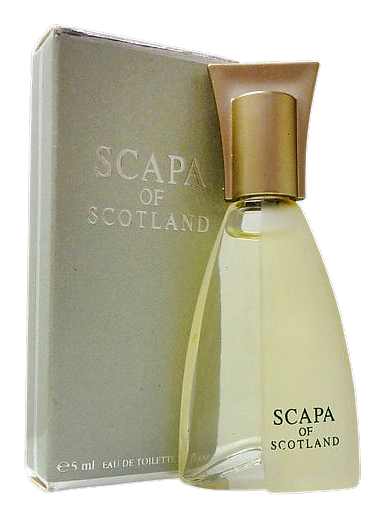
Publicly available records on Scapa are thin. The most consistently cited piece of information is that the house produced one fragrance, Scapa of Scotland, released in 1991. No founding date, founder name, or parent company appears in major fragrance databases or industry references with enough corroboration to state with confidence. The brand surfaces in directories and encyclopedia-style listings, but those entries typically reproduce the same minimal data: one perfume, one year. This scarcity of documented history is itself a defining feature of the brand. Unlike heritage houses such as Houbigant (operating since 1775) or Officina Profumo-Farmaceutica di Santa Maria Novella (dating to 1221), Scapa did not accumulate centuries of institutional history. Its timeline appears to begin and, for practical purposes, end with that single 1991 launch. Researchers and collectors occasionally encounter the name in vintage fragrance catalogs or auction listings, where the original bottles turn up as curiosities from a brief Scottish entry into perfumery. The limited footprint makes it difficult to trace a continuous corporate narrative, and any reconstruction relies more on inference than on documented milestones. Because the brand left so little public documentation, its creative philosophy can only be inferred from the single composition associated with it. The name itself, Scapa, points to the Orkney Islands off the northern coast of Scotland, and the full title Scapa of Scotland reinforces a deliberate geographic identity. This suggests a design intent rooted in place rather than abstraction, an approach that ties the scent to a specific landscape. In the early 1990s, many niche and semi-niche houses were exploring regional or heritage-based branding, and Scapa appears to have followed that thread, building its identity around Scottish origin rather than a classical European perfume capital. Without interviews, press archives, or confirmed perfumer credits, deeper claims about values or creative direction would be speculation. What can be said is that the choice to name a fragrance after a specific locale, combined with the release of only one product, implies a measured, place-driven approach rather than a broad commercial ambition.