


Heritage
A house, in its own words
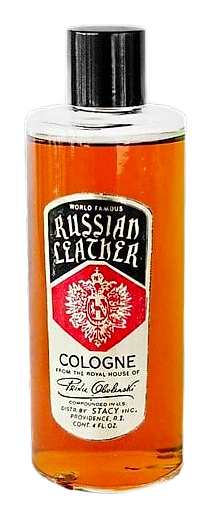
The documented history of Prince Obolenski begins in the Soviet Union, where Sergei Obolensky is reported to have become involved in the perfume business during the 1930s. One historical account connects him with Alexander Tarsaidze, identifying Tarsaidze as a manager associated with the perfume trade and a future Soviet perfumer. This period matters because it places the brand’s origins within a Russia where fragrance production, distribution, and the cultural language of classic cologne were being reshaped under Soviet conditions. Credo appears in the fragrance record as a Prince Obolenski scent from 1943, making it one of the clearest early dated markers attached to the name. By 1960, Russian Leather Cologne was part of the house’s documented output. The brand later became associated with Russian Leather After Shave, extending its leather-led identity into grooming. These dates suggest a progression from wartime fragrance, through a more recognizably classic Russian leather expression, to a broader range of scented toiletries. The name also carries a royal resonance through its association with Prince Pavel Obolensky and the wider Obolensky family, although the surviving material does not establish a formal dynastic role for the perfume business itself. Much of what is known today comes from vintage material rather than a continuous corporate archive. Sealed bottles and boxes described as new old stock have allowed collectors to encounter the brand in a remarkably complete state. That material preserves the original packaging, naming, and presentation of a relatively obscure fragrance house. The result is a history assembled from dated scents, surviving objects, and specialist accounts rather than a polished institutional narrative. Prince Obolenski’s heritage therefore lies in a specific intersection: Soviet-era perfume commerce, the classical Russian leather tradition, and the collector culture that keeps early examples accessible for study. Prince Obolenski’s creative identity appears to have been shaped less by a published manifesto than by a recurring fragrance idea and the cultural associations surrounding its name. The clearest expression of that idea is Russian leather. Rather than presenting leather as a glossy, contemporary accent, the house is linked to the darker, drier, more atmospheric character associated with the material in classic Russian perfumery. Credo, dated to 1943, indicates that the house’s early work was not confined to a single visible scent. Russian Leather Cologne, documented in 1960, later gave the leather theme a more explicit cologne identity, while Russian Leather After Shave translated the same atmosphere into a grooming format. This continuity across perfume and shaving products suggests a practical approach to fragrance, one in which a recognizable olfactory signature could move between different routines and preparations. The royal bearing of the Obolensky name adds another dimension. It suggests formality, ceremony, and a sense of inherited tradition, though the available evidence does not support claims about a formal creative program or a continuous royal house operation. The brand’s present-day appeal also depends on preservation. Sealed vintage examples preserve not only a scent but a complete period object, including its bottle, box, and typography. Collectors value those details because they allow fragrance to be understood in its original context. Prince Obolenski’s philosophy can therefore be read through three linked principles: a strong material signature, adaptation across classic product forms, and an archival sensibility. The house survives through objects that retain their history, giving collectors a tangible connection to mid-century Russian fragrance rather than a modern reinterpretation detached from its origins.