The Story
Why it exists.
The beginning
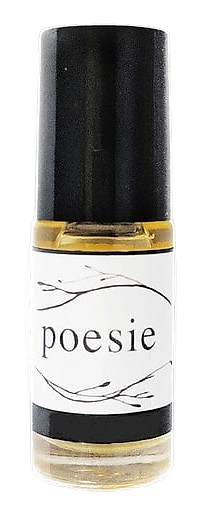
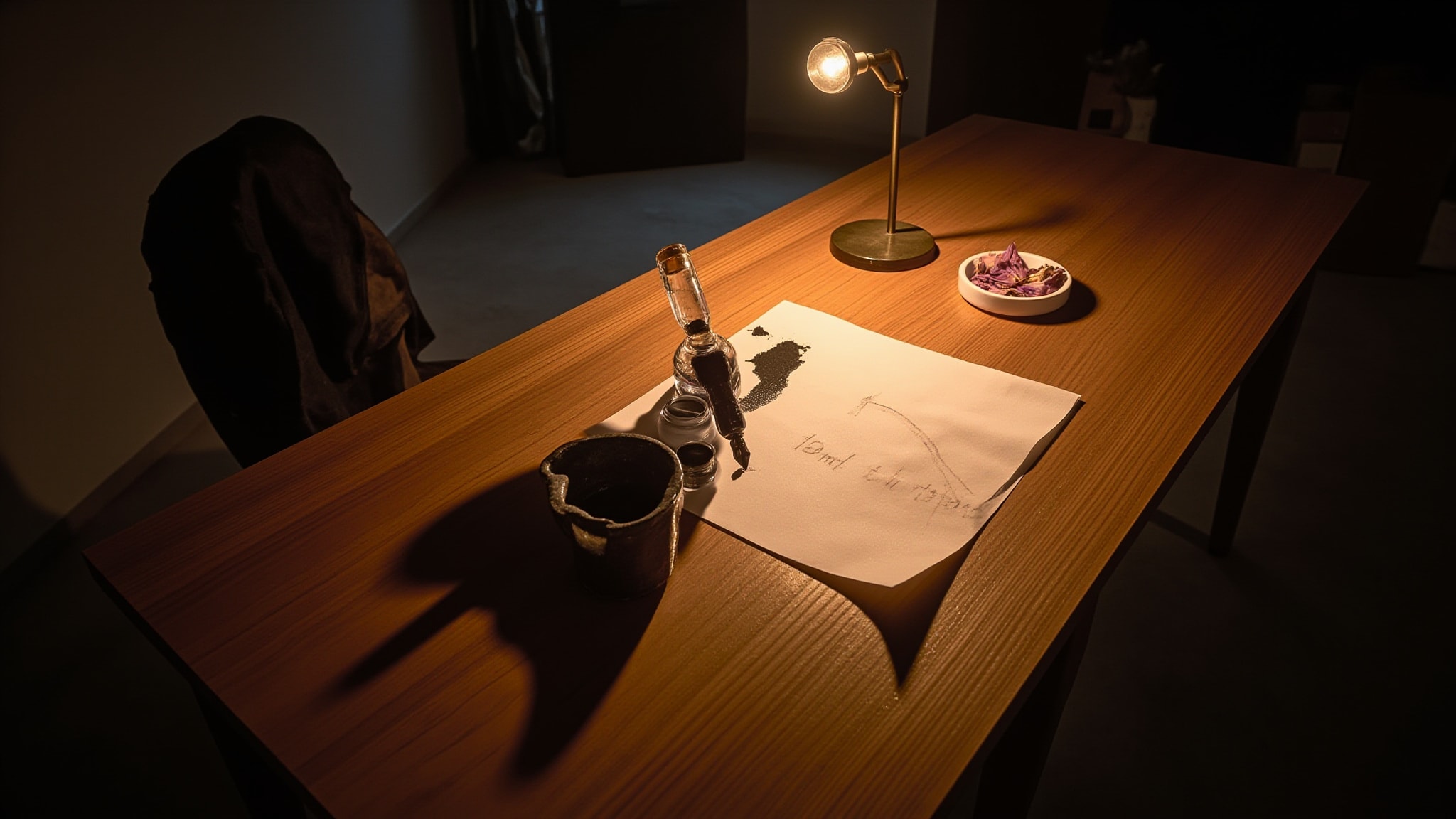
Woman Triumphant draws its character from Katharine Parr, a wife of Henry VIII who navigated Tudor court politics. According to the source text, she reconciled Henry to his children, was particularly close to Elizabeth, and authored a book of devotion that was published after Henry's death. The figure here isn't the bride in a wedding portrait. She's the one who picked up the pen.
The composition leans on a handful of carefully chosen materials: white oud, ink, aged paper, iris. Each carries an archival weight. The ink accord, described in reviews as 'the Poesie ink accord,' reads more like wet nib on parchment than any single botanical. Iris brings that cool, suede-like stillness, while white oud provides the kind of resinous backbone that holds without shouting. It's a portrait built from textures you'd find in a private library rather than a perfumery catalog.
The evolution
The opening is almost reluctant, a hush of paper and iris powder with just a suggestion of something cooler behind it. As the hours pass, the ink accord takes over, darkening the iris into something more like wet graphite on a page. The white oud arrives quietly, threading through the heart like resin soaked into old bindings. Eventually the composition shifts into a leathery, slightly sweet register described in reviews as having 'a leathery vanilla vibe,' closer to worn book covers and wooden desks. The iris never fully leaves. It just learns how to share space. In the drydown, what's left on skin is a close, dry murmur of iris and oud that doesn't demand attention but holds a quiet authority, a whisper of paper and pigment that clings to fabric and skin alike.
Cultural impact
Among iris-forward compositions Woman Triumphant leans darker and more literary, closer to a private notebook than a boudoir. Wearers compare the ink accord to the smell of a freshly signed page rather than any traditional perfume genre, and that unusual construction gives the fragrance its own pocket of air within the indie world. There's a withdrawn, archival quality to the whole composition, something that rewards attention rather than demanding it.