

Heritage
A house, in its own words
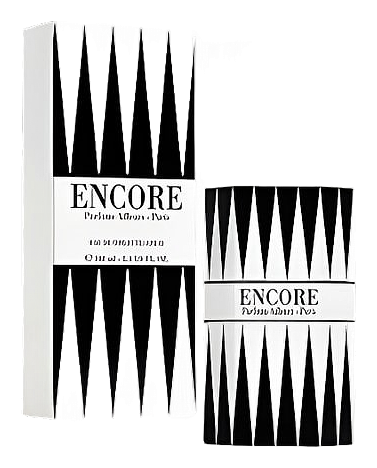
Parfums Ailleurs appears to be a French fragrance house whose earliest documented collection centers on 2007. The house presented Ici, Encore, and Ailleurs during that year, giving its catalogue an unusually coherent debut. Rather than tracing its origins to a widely documented founder, historical estate, or long sequence of reformulations, the available public record begins with these three releases. That makes 2007 the most defensible founding year for the brand as it is encountered in fragrance databases today. The naming of all three fragrances reinforces the house's central conceit. Ici means here, Encore means again, and Ailleurs means elsewhere. Together, they form a compact narrative about presence, return, and displacement. Maison d'Orsay, Houbigant, Histoires de Parfums, Guerlain, and other houses featured in the research share the French fragrance landscape, but they are separate labels and should not be treated as Parfums Ailleurs' corporate history. No reliable source in the supplied material establishes a connection between those houses and Parfums Ailleurs. The brand's heritage is therefore best understood as a short, focused origin story rather than a centuries-old lineage. Its first recorded chapter is also its defining one, a trio of fragrances arranged around a distinctive vocabulary of time and place. Parfums Ailleurs expresses its creative idea through names before it asks the wearer to judge a scent by ingredients alone. Ici, Encore, and Ailleurs form a semantic sequence: here, again, elsewhere. This structure suggests that fragrance is being used as an instrument for orientation, memory, and imagined movement. The approach appears intimate rather than demonstrative, with each release acting as a distinct emotional coordinate. The house does not publicly document a formal manifesto in the supplied material, so any broader statement about its values would require speculation. Still, the titles communicate a restrained creative position. They avoid literal references to flowers, woods, or exotic locales, allowing the fragrances to retain more ambiguity. This is a useful approach for a niche house because it creates a narrative framework without prescribing a single reading of each composition. The names invite personal association, whether the wearer thinks of a familiar room, a repeated ritual, or a place never visited. Parfums Ailleurs also places these three ideas together in one collection, making the line feel curated and self-contained. Its identity lies in that relationship among moods, not in a publicly stated innovation claim or an elaborate institutional history.