




Heritage
A house, in its own words
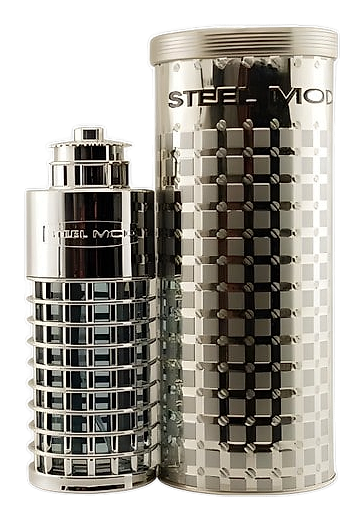
Monika Klink emerged from the Italian fragrance and design context associated with House of Venice. The most consistent catalogue records place the launch of seven Monika Klink fragrances in 2002, including Art of Venice for women, Art of Venice for men, Woman's Story, Men's Story, and Steel Mod. An archival fragrance index instead associates Monica Klink with House of Venice and lists Art of Venice, Art of Venice for men, Gunner, and Men's Story under the year 2000. These dates conflict, so 2002 has stronger support across fragrance databases and appears in the supplied catalogue context, while the earlier date is best treated as an archival attribution rather than a confirmed founding year. The house is also described in some retail and reference material as French, although the designer is identified as Italian and is linked to House of Venice. The available sources do not clearly establish the exact year of formal founding, the location of the studio, or the circumstances behind Monika Klink's entry into perfumery. What can be confirmed is the shape of its early catalogue: a tightly grouped set of releases, organized through recurring pairs and named concepts such as Steel Mod, Woman's Story, Men's Story, and Art of Venice. This focused body of work gives the brand a clear archival character. It belongs to the turn-of-the-century period when designer fragrance houses often built identity around a central creative figure, a house name, and a limited number of distinctive scent stories. Monika Klink's history is therefore less about a long sequence of expansions than about a concise launch period and a recognisable design lineage rooted in Italy and House of Venice. Monika Klink's creative identity is most clearly expressed through naming and structure. The use of Steel Mod introduces a mechanical, metallic register, while Woman's Story and Men's Story frame fragrance as narrative and personal expression. Art of Venice adds a cultural reference, drawing the brand into the visual and romantic language of Venice without requiring the house to be described only as a Venetian label. These names suggest a collection built around contrasts, including metal against romance, masculine against feminine, and personal narrative against place-based imagery. The same early concentration across men's and women's categories also points to a deliberately paired approach, with separate compositions designed to share a coherent naming world. Independent sources do not provide a detailed statement from the founder about perfumery values, preferred ingredients, or the creative process, so broader claims about innovation or artistic leadership would be difficult to verify. It is more accurate to read the philosophy through the catalogue itself. Monika Klink appears to have treated scent as a form of storytelling, allowing each release to occupy a distinct identity while remaining part of one recognisable house. The compact range and repeated title conventions give the fragrances a sense of authorship. Even where formal documentation is limited, the names communicate a clear concept that can be felt before opening the bottle. This is a central part of the house's lasting appeal within fragrance collecting, where a strong title and a coherent collection narrative can matter as much as a conventional luxury positioning.