


Heritage
A house, in its own words
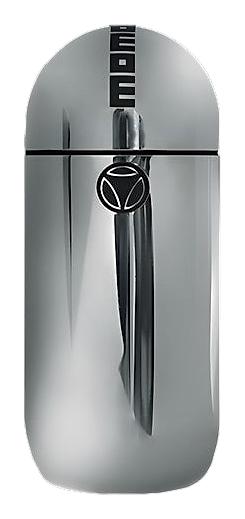
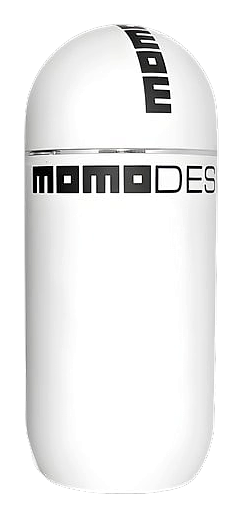
The history of Momo Design is closely connected to Sergio Momo, an Italian perfumer and founder of Xerjoff. Multiple independent fragrance and design publications identify Momo as a central figure in Xerjoff’s development, while interviews describe the house as an extension of his earlier design business. The sources place Xerjoff’s origins in Turin and identify its co-founders as Sergio Momo and Dominique Salvo, although accounts differ on whether the house began in 2004 or was formally founded in 2007. Momo Design appears to sit within this wider design and fragrance context, with its named fragrances, Gold, Silver, Black, White and Violet, forming the clearest documented record of the brand. The collection’s use of color as its organizing principle gives Momo Design a distinct identity, separate from the ornate presentation often associated with Xerjoff. Beyond those fragrance names and release dates, the supplied research does not establish a detailed founding date, original location or independent corporate timeline for Momo Design, so those points remain unconfirmed. What can be said is that the brand belongs to the same creative lineage as Sergio Momo’s work in Italian perfumery, where design, bottle-making and fragrance composition are treated as connected practices. Momo Design’s visible creative idea is reduction through color. Rather than building its identity around a single elaborate house narrative, the collection uses names that are immediately legible: Gold, Silver, Black, White and Violet. This creates a visual and conceptual framework in which each fragrance can occupy its own place within a coordinated spectrum. The approach reflects a broader design sensibility associated with Sergio Momo, whose interviews and profiles link fragrance creation with the design of the vessel and the presentation of the perfume as an object. In those accounts, perfume is not treated as a detached liquid, but as part of a complete sensory and visual encounter. The color system of Momo Design appears to make that connection more direct, offering a clear frame for comparing fragrances while preserving individual identities. The research does not identify a documented Momo Design manifesto or a named perfumer for the collection. As a result, any broader statement about its artistic intent should remain qualified. Still, the collection’s naming structure suggests an interest in clarity, contrast and collectability, with color acting as both a signature and a practical organizing device.