Heritage
A house, in its own words
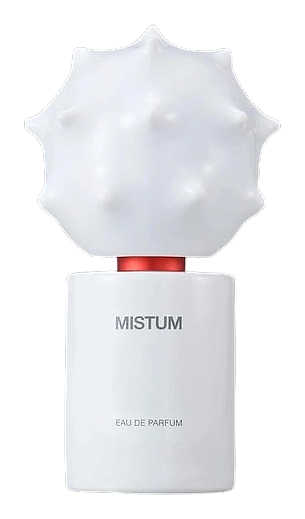
MISTUM begins with Hong Kong, a city shaped by constant exchange between East and West, tradition and technology, memory and possibility. The house describes itself as creating olfactory portraits of Future Humans, people who exist between the physical and digital and between instinct and algorithm. Rather than claiming one inherited style, MISTUM builds its identity from collision: Eastern sensibility meets contemporary perfumery, while heritage meets futurism. Its founding premise is that fragrance arrives before language. A scent enters a room, lingers after the wearer leaves and shapes the impression left behind. That idea informs a debut collection of seven fragrances, each conceived as an identity rather than a conventional fragrance family. The house also offers a portable 10ml edition and a Scent Wear Kit, extending its focus from static scent to the way fragrance accompanies body, signal and frequency. Public details about the company’s year of establishment, founding team and early commercial milestones are not yet available. MISTUM starts with people and the identities emerging around them. Each fragrance represents an emotional architecture, a mode of moving through the world and a distinct frequency within the first collection. The approach places scent as an active form of communication rather than decoration. MISTUM is interested in identity as something continually rewritten through exchange, imagination and cultural intersection. Hong Kong provides the starting point, not as nostalgic heritage, but as a living city where opposing ideas share the same space. The house’s seven scents are therefore presented as portraits for communities that have yet to be named. Their names and individual compositions are not detailed in the available material, so it would be premature to assign specific accords, moods or meanings to them. The clearest distinction lies in the concept: a collection built around evolving human states, with scent treated as atmosphere, signal and memory.